Introduction
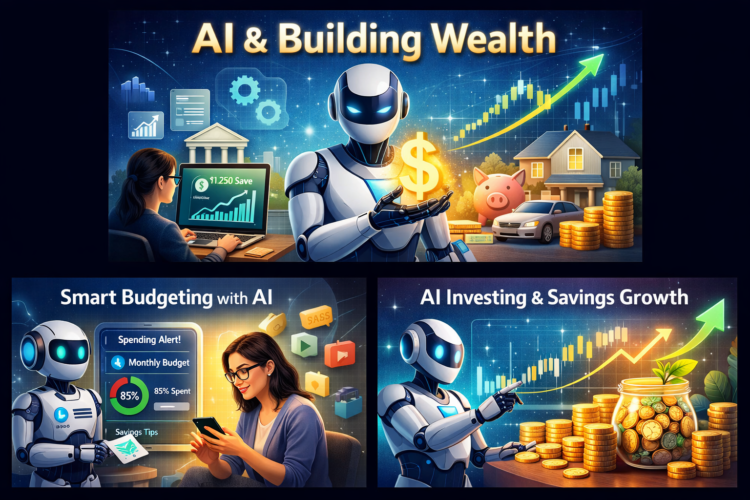
Artificial Intelligence is rapidly transforming personal finance in the United States. What used to require expensive financial advisors and years of experience is now accessible through AI-powered tools.
And the shift isn’t small.
- Around 37% of Americans are already using AI tools for financial planning and budgeting, especially younger generations
- At the same time, nearly 70% of Americans feel anxious about retirement, creating massive demand for smarter financial solutions
AI is stepping in to fill that gap.
Smarter Budgeting and Expense Tracking
AI-driven budgeting tools help users track spending automatically and reduce unnecessary expenses.
This matters more than you think.
- Many Americans struggle with financial awareness, and 64% say they don’t fully understand modern financial tools and options
AI simplifies this by:
- Automatically categorizing expenses
- Detecting unusual spending patterns
- Sending real-time alerts
The result: better financial control without constant manual effort.
Personalized Financial Advice at Scale
Traditional financial advice is expensive and often inaccessible.
- Only 27% of Americans use financial advisors, largely due to cost barriers
AI removes that barrier by offering:
- Real-time financial insights
- Personalized savings plans
- Debt management strategies
This democratization of financial advice is one of the biggest shifts in modern finance.
Automated Investing and Wealth Growth
AI is having its biggest impact in investing.
- Robo-advisors now manage over $2.4 trillion in assets globally (2025)
- These platforms can deliver up to 17% higher returns compared to traditional methods
- Typical fees are only 0.25%–0.50%, far lower than traditional advisors
Even adoption is growing:
- About 1 in 10 investors already use AI tools like chatbots for stock decisions
Lower costs + automation + data = more consistent investing behavior.
Finding Hidden Savings Opportunities
AI doesn’t just grow wealth. It also reduces waste.
Many tools:
- Detect unused subscriptions
- Recommend cheaper alternatives
- Optimize recurring bills
This type of micro-optimization compounds over time.
And since most people overlook small expenses, AI acts like a constant financial auditor that never gets tired.
Credit Score Optimization
Credit health is critical in the U.S. financial system.
AI helps by:
- Analyzing credit usage patterns
- Recommending optimal payment timing
- Identifying actions that improve scores faster
Instead of guessing what affects your credit, AI gives precise, data-backed actions.
Side Income and Opportunity Discovery
AI is also increasing earning potential.
- Around 50% of investors globally say they are willing to use AI for financial decisions, showing growing trust in AI-driven tools
AI tools now help users:
- Discover freelance opportunities
- Optimize online businesses
- Identify trending markets
This shifts AI from a “saving tool” to a wealth-building engine.
The Long-Term Impact on Wealth Building
Wealth is built through consistency, not luck.
AI improves this by:
- Removing emotional decisions
- Maintaining disciplined investing
- Continuously optimizing financial behavior
Even adoption trends confirm this shift:
- The robo-advisory market is projected to grow from $61.7 billion in 2024 to $470.9 billion by 2029
That’s not hype. That’s a structural change.
Challenges and Limitations
Despite its advantages, AI is not perfect:
- Only 15% of investors currently use robo-advisors, showing adoption is still limited
- Many users still prefer human advisors for trust and personalization
AI works best as a tool, not a complete replacement for human judgment.
Conclusion
AI is fundamentally changing how Americans manage money.
The data shows clear trends:
- More adoption
- Lower costs
- Better access to financial tools
- Improved investment outcomes
For the average person, AI is no longer optional. It’s becoming a competitive advantage.
Those who use it effectively will likely save more, invest smarter, and build wealth faster than those who don’t


1 Comment
How AI Is Transforming Holiday Shopping in 2026 – Top Verified Coupons & Daily Deals | Save More with dealzenohub
April 17, 2026 @ 10:27
[…] is being used in several practical ways during the holiday season. The top three use cases […]
Leave Comment