
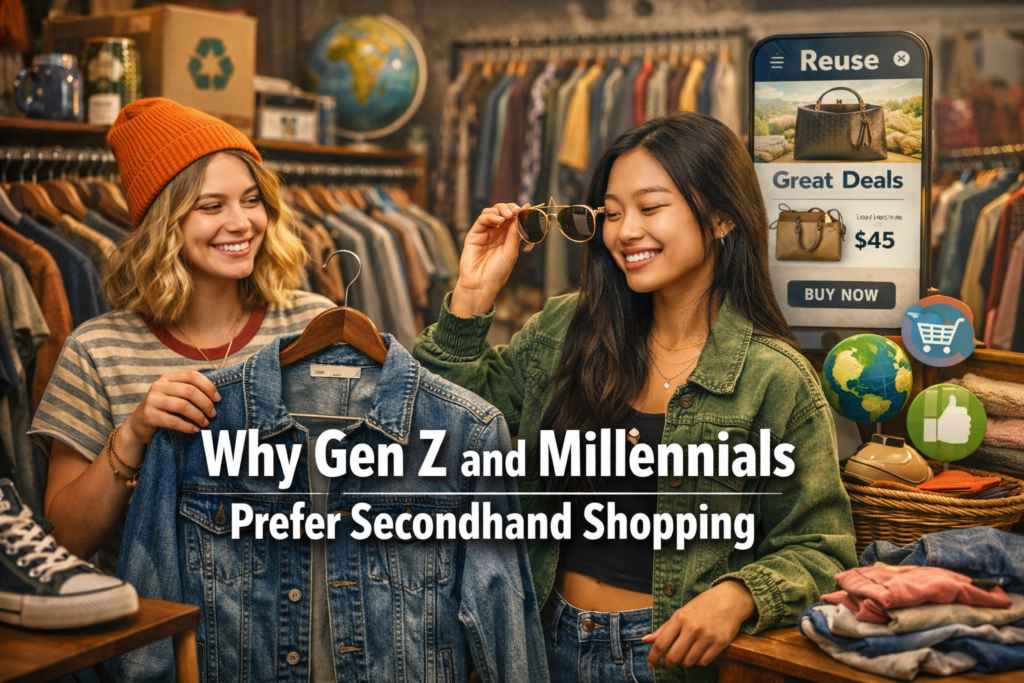
Secondhand Shopping Is No Longer the Backup Plan
Gen Z and Millennials are not buying secondhand only because it looks cool on TikTok.
They are doing it because new clothes cost more, rent eats more of the paycheck, and paying full price for everything no longer feels smart.
A used jacket, a thrifted bag, a refurbished phone, or a resale pair of sneakers can do the same job as a new item for much less money. Sometimes it also looks better because it does not feel like the same product everyone else bought from the same fast-fashion drop.
That is the real reason secondhand shopping keeps growing: it solves more than one problem at once.
It helps younger shoppers save money. It gives them more personal style. It makes shopping feel less wasteful. It can even turn old clothes into cash when they resell items they no longer wear.
But secondhand shopping is not automatically smart. A cheap item can still be a bad buy. A vintage piece can be overpriced. A resale app can make impulse buying feel harmless. And some used items are not worth the risk.
This guide explains why Gen Z and Millennials are choosing secondhand shopping — and how to do it without wasting money.
Quick Look: Why Younger Shoppers Choose Secondhand
| Reason | What It Really Means | Smart Shopper Move |
|---|---|---|
| Lower prices | You can buy better brands for less | Compare the used price with the current new price |
| Personal style | Thrifted pieces feel less generic | Look for quality, not just “vintage” labels |
| Sustainability | Buying used extends the life of products | Buy only what you will actually use |
| Resale value | Some items can be sold again later | Choose brands and categories that hold value |
| Social media influence | Thrift hauls made resale more visible | Do not buy just because the find looks good online |
| Side cash | Selling old items can fund new purchases | Start with items you already own |
| Inflation pressure | New products feel expensive | Use secondhand as one option, not an excuse to overbuy |
1. Price Is the First Reason
Let’s be honest: price is the main reason many young shoppers start looking secondhand.
A new jacket may cost $90. A used one in good condition may cost $28. A designer bag may be out of reach new, but possible through resale. A desk, chair, mirror, lamp, or bookshelf may cost far less on Facebook Marketplace than at a furniture store.
That matters when everyday costs are already high.
Gen Z and Millennials are not just trying to look stylish. Many are trying to stretch their money without giving up every small joy. Secondhand shopping helps because it offers a middle path: you can still buy things, but you do not always have to pay new-product prices.
Smart Shopper Rule
Do not ask only, “Is this cheaper than new?”
Ask:
- Is it in good condition?
- Is the price fair for its age?
- Can I return it?
- Is shipping too expensive?
- Would I still want it without the discount?
- Can I find the same item cheaper elsewhere?
A secondhand item is not a good deal just because it is used.
2. Secondhand Helps Shoppers Avoid Full-Price Regret
Many young shoppers have learned a hard lesson: buying new at full price does not always feel good later.
A trendy piece can lose appeal after two weeks. A fast-fashion item can wear out quickly. A gadget can drop in price after a sale. A product pushed by influencers may not fit real life.
Secondhand shopping slows the process down. It forces shoppers to compare condition, price, size, seller history, and availability. That extra friction can be useful.
It gives you a pause.
Instead of buying the first item you see, you start asking better questions:
- Do I actually need this?
- Can I find it used?
- Is it worth buying new?
- Will I use it often?
- Could I resell it later?
That kind of thinking is what separates smart shopping from random spending.
Related on DealZenoHub: The TikTok Trend Changing Gen Z Spending.
3. Style Feels More Personal
Fast fashion made it easy to buy cheap clothes quickly. But it also made many wardrobes look the same.
Secondhand shopping offers something different. You can find older cuts, discontinued designs, vintage pieces, local brands, better fabrics, and items that are not sitting on every retail rack.
For Gen Z especially, style is not only about looking polished. It is about identity. A thrifted leather jacket, old denim, a vintage sports sweatshirt, or a rare handbag can feel more personal than a brand-new item from a trending store.
That does not mean every secondhand piece is stylish. Some are damaged, overpriced, or simply not worth buying.
The point is choice. Secondhand shopping gives younger shoppers a wider range of choices than whatever is currently being pushed by retailers.
What to Check Before Buying Used Clothes
Before buying secondhand clothing, inspect:
- Stains
- Pilling
- Fading
- Stretched seams
- Broken zippers
- Missing buttons
- Bad odors
- Fabric thinning
- Armpit discoloration
- Inside labels
- Real measurements
For online listings, do not rely on the size tag only. A medium from one brand may fit like a small from another. Ask for measurements when needed.
4. Resale Apps Made It Easier
Secondhand shopping used to mean visiting thrift stores and hoping to find something good. That still works, but apps changed the game.
Now shoppers can search by brand, size, color, condition, location, and price. They can save searches, follow sellers, compare listings, and get alerts when prices drop.
Popular resale channels include:
- Thrift stores
- Local consignment shops
- Facebook Marketplace
- eBay
- Depop
- Poshmark
- Vinted
- Mercari
- ThredUp
- Vestiaire Collective
- Local vintage stores
- Community buy-and-sell groups
Each option has a different purpose.
A local thrift store is good for discovery.
A resale app is better for targeted searches.
A consignment shop may cost more but usually offers better curation.
A marketplace can be great for furniture, but you need to watch for scams.
Smart Shopper Rule
The easier an app makes it to buy, the more discipline you need.
A resale app can save you money. It can also make you scroll and buy things you never planned to buy.
5. Younger Shoppers Are Selling Too
Secondhand shopping is not only about buying. More Gen Z and Millennial shoppers are also selling.
That changes the way they think about ownership.
A jacket is not always a permanent item. A dress can be worn for a season and resold. Sneakers can be bought, used carefully, and sold later. Furniture can be sold before moving. A phone can be traded in or resold after upgrading.
This does not turn every purchase into an investment. Most used items lose value. But resale can reduce the real cost of ownership.
Example:
You buy a used jacket for $40.
You wear it for six months.
You resell it for $25.
Your real cost was $15, plus time and any platform fees.
That is a smarter way to think about shopping.
How to Start Selling Secondhand
Start with five items you already own:
- Clothes you have not worn in six months
- Shoes in good condition
- Bags or accessories
- Small electronics
- Books
- Home items
- Fitness gear
- Unused gifts
Take clear photos. Describe flaws honestly. Price fairly. Respond quickly. Ship on time.
Good selling habits build trust.
6. Sustainability Matters, But It Is Not the Whole Story
Sustainability is part of the secondhand appeal, but it is not the only reason younger shoppers buy used.
Many people care about reducing waste. They do not like the idea of clothes being worn once and thrown away. They know fast fashion creates too much product. They want to make better choices when possible.
But for most shoppers, sustainability works best when it also fits the budget.
Secondhand shopping is powerful because it does both. It can reduce waste and save money at the same time.
Still, buying used is not automatically sustainable if it becomes overconsumption.
Buying ten thrifted shirts you never wear is not much better than buying ten new shirts you never wear.
Smart Shopper Rule
The most sustainable item is usually the one you actually use.
Do not buy used items just because they are cheap. Buy them because they fit your life.
7. What Is Actually Worth Buying Secondhand?
Some categories are usually strong secondhand buys.
Clothing
Good secondhand clothing can save a lot of money, especially for jackets, denim, coats, formalwear, and quality basics.
Best used clothing buys:
- Denim jackets
- Jeans
- Coats
- Blazers
- Sweatshirts
- Occasion dresses
- Leather jackets
- Vintage tees
- Workwear
- Quality knitwear
Be careful with:
- Swimwear
- Underwear
- Heavily worn shoes
- Clothes with strong odors
- Items with no return option
- Pieces that require expensive tailoring
Furniture
Used furniture can be a great deal, especially for people moving into apartments or dorms.
Good secondhand furniture buys:
- Solid wood tables
- Bookshelves
- Desks
- Dining chairs
- Nightstands
- Mirrors
- Metal shelves
- Simple storage pieces
Be careful with:
- Mattresses
- Upholstered sofas with unknown history
- Items with signs of bugs
- Broken drawers
- Water damage
- Strong smells
- Anything that costs too much to move
Electronics
Used electronics can save money, but they require more caution.
Good secondhand electronics buys:
- Refurbished phones from trusted sellers
- Used monitors
- Keyboards
- Speakers
- Cameras
- Game consoles with proof of function
- Certified refurbished laptops
Be careful with:
- No-return electronics
- Locked phones
- Damaged charging ports
- Weak batteries
- Missing serial numbers
- Prices that look too good to be true
Books, Decor, and Small Home Items
These are often low-risk and good value.
Good buys:
- Books
- Frames
- Lamps
- Vases
- Wall art
- Kitchen tools in good condition
- Storage baskets
- Office items
Be careful with:
- Damaged electrical items
- Non-stick cookware with scratches
- Items with mold, smoke, or pest signs
- Anything hard to clean properly
8. What You Should Usually Avoid Buying Used
Secondhand shopping is smart only when the item is safe, clean, and worth the price.
Be careful or avoid buying used:
- Mattresses
- Pillows
- Underwear
- Bike helmets
- Car seats
- Cribs with unknown history
- Old non-stick pans
- Personal hygiene items
- Open cosmetics
- Appliances with damaged wiring
- Items with recall risks
- Electronics without proof they work
- Luxury goods without authentication
The lower price is not worth it if the item creates safety, hygiene, or repair problems.
Consumer Reports and other consumer-safety sources often warn shoppers to be careful with used baby gear, mattresses, and products where safety history matters.
Smart Shopper Rule
If the product protects your body, your child, your health, or your home from risk, think twice before buying it used.
9. How to Know If a Secondhand Price Is Fair
A used item should not be priced like new unless it is rare, collectible, authenticated, or almost untouched.
Before buying, compare:
- Current retail price
- Sale price
- Condition
- Brand reputation
- Age of the item
- Shipping cost
- Platform fees
- Return option
- Similar sold listings
- Cost of cleaning or repair
A seller may list a jacket for $60 because it originally cost $120. But if the same jacket is now on sale new for $70, the used price is not impressive.
Simple Pricing Rule
For normal used clothing:
- Like new: 50–70% of current retail price
- Good condition: 30–50% of current retail price
- Noticeable wear: under 30% of current retail price
- Damaged: only worth buying if repair is cheap and easy
This is not a fixed law. Brand, rarity, and demand matter. But it gives you a starting point.
10. Watch for Resale Scams
Secondhand marketplaces can be useful, but scams exist.
The FTC advises shoppers to check seller rules, refund policies, problem-resolution options, and safe payment methods before buying from online marketplaces.
Red flags include:
- Seller asks you to pay outside the platform
- Seller pushes you to move the conversation elsewhere
- Price is far below normal
- Photos look stolen or too polished
- Seller has no reviews
- Seller avoids basic questions
- Listing has vague details
- Shipping story sounds strange
- Payment link looks suspicious
- Seller pressures you to act fast
For local meetups, choose a public place. For expensive items, inspect before paying. For online purchases, stay inside the platform when possible.
Smart Shopper Rule
A real seller can answer normal questions.
Ask for:
- More photos
- Measurements
- Proof the item works
- Photos of flaws
- Serial number when appropriate
- Purchase receipt for expensive goods
- Authentication for luxury items
If the seller gets angry or evasive, walk away.
11. Use Coupons When Buying New Still Makes More Sense
Secondhand is not always the best option.
Sometimes buying new makes more sense, especially when:
- The used price is too close to new
- The item has safety concerns
- You need a warranty
- You need a specific size or color
- Returns matter
- The new item is on sale
- A coupon makes the new price better
- Shipping on the used item is too high
This is where coupon comparison matters.
Before buying used, check the new price after:
- Sale discounts
- Coupon codes
- Cashback
- Student discounts
- Newsletter offers
- Free shipping
- Return benefits
You may find that new is only a few dollars more and comes with better protection.
Related on DealZenoHub: Best Coupon Apps and Browser Extensions.
12. Secondhand Shopping Can Become Overbuying
This is the part many people avoid saying.
Secondhand shopping can still become a spending problem.
Because the prices are lower, it is easier to justify extra purchases:
“It was only $8.”
“It is vintage.”
“I can resell it later.”
“This would cost more new.”
“I may need it someday.”
Those sentences can fill a closet fast.
A smart secondhand shopper still needs rules.
Try these:
- One item in, one item out
- Wait 24 hours before buying online
- Set a monthly resale budget
- Keep a wishlist
- Do not browse when bored
- Do not buy items that need major repairs
- Do not buy sizes that do not fit now
- Sell or donate before buying more
Cheap clutter is still clutter.
13. The Best Secondhand Strategy for Gen Z and Millennials
A good secondhand strategy is simple:
Buy used when it gives you clear value.
Buy new when safety, warranty, fit, or return protection matters more.
Sell what you no longer use.
Avoid buying just because the price is low.
Here is a practical system:
Step 1: Decide What You Need
Do not open resale apps with no plan. Write down what you are looking for first.
Example:
- Black winter coat
- Desk chair
- Brown boots
- Small bookshelf
- Camera bag
Step 2: Check the New Price
Search for the item new. Look at the retail price and current sale price.
Step 3: Compare Used Listings
Check several listings before choosing one. Look at condition, shipping, seller reviews, and return rules.
Step 4: Set a Maximum Price
Decide your limit before negotiating.
Step 5: Inspect Carefully
Look for flaws, missing parts, wrong sizing, and repair costs.
Step 6: Buy Only If the Deal Still Makes Sense
If the item is not useful, not fairly priced, or not in good condition, skip it.
14. Secondhand vs New: Which Should You Choose?
| Situation | Better Choice |
|---|---|
| You want a unique jacket or vintage piece | Secondhand |
| You need underwear, swimwear, or hygiene products | New |
| You want solid wood furniture | Secondhand |
| You need a mattress | Usually new |
| You want a phone with warranty | Certified refurbished or new |
| You want a trendy item for less | Secondhand |
| You need exact sizing and easy returns | New or retailer with free returns |
| You want luxury goods | Authenticated resale only |
| You are buying baby safety gear | New or verified safe source |
| You want books, decor, or frames | Secondhand |
The best shoppers do not blindly choose used or new. They compare both.
15. How Secondhand Fits a Smarter Budget
Secondhand shopping works best when it supports a budget instead of replacing one.
Example monthly shopping plan:
| Category | Budget |
|---|---|
| Clothing | $40 |
| Home items | $25 |
| Personal treats | $20 |
| Savings | $100 |
| Resale earnings | Add to next month’s budget |
If you sell an old jacket for $25, do not immediately spend $60 because you “made money.” Decide where the money goes first.
Options:
- Add it to savings
- Use it for a planned purchase
- Pay down debt
- Fund your next thrift find
- Keep it for emergencies
Selling used items is useful only if it improves your money habits.
Final Checklist Before Buying Secondhand
Before you buy, ask:
- Do I need this?
- Is the condition good enough?
- Is the price fair compared with new?
- Are shipping costs reasonable?
- Can I return it?
- Does the seller look trustworthy?
- Are the photos clear?
- Have I checked measurements?
- Is there any safety or hygiene risk?
- Would I still want this tomorrow?
- Can I resell it later if needed?
- Am I buying because I like it or because it is cheap?
If the item passes the checklist, it may be a good buy.
If not, leave it.
There will always be another listing.
Final Thoughts
Gen Z and Millennials are not choosing secondhand shopping because they rejected new products completely.
They are choosing it because paying full price for everything no longer feels necessary.
Secondhand shopping gives them more control. It helps them save money, find better pieces, avoid generic trends, reduce waste, and sometimes earn cash from items they no longer use.
But the best secondhand shoppers are not random bargain hunters. They are selective.
They compare prices. They inspect condition. They avoid risky items. They watch for scams. They know when buying new is smarter. They do not let a low price talk them into a bad purchase.
That is the real lesson.
Secondhand shopping is not about buying more because it is cheaper.
It is about buying better, paying less, and staying in control.
FAQ
Why do Gen Z and Millennials like secondhand shopping?
Gen Z and Millennials like secondhand shopping because it helps them save money, find unique items, reduce waste, and avoid paying full price for products they can often buy used in good condition.
Is secondhand shopping actually cheaper?
Secondhand shopping can be cheaper, but not always. You still need to compare the used price with the current new price, sale price, shipping cost, condition, and return policy.
What are the best things to buy secondhand?
Good secondhand buys often include denim, coats, jackets, books, solid wood furniture, mirrors, decor, refurbished electronics from trusted sellers, and quality bags or accessories.
What should you avoid buying used?
Be careful with used mattresses, pillows, underwear, bike helmets, car seats, cribs, old non-stick pans, open cosmetics, damaged electronics, and any item with safety or hygiene concerns.
How can I avoid scams when buying secondhand online?
Stay inside the platform when possible, check seller reviews, avoid outside payment requests, ask for extra photos, compare prices, and be careful with deals that look too good to be true.
Is buying secondhand sustainable?
Buying secondhand can reduce waste and extend the life of products. But it is only truly helpful if you buy items you will use. Overbuying used items still creates clutter and waste.
Should I buy new or secondhand?
Buy secondhand when the item is safe, clean, fairly priced, and in good condition. Buy new when you need a warranty, exact sizing, easy returns, hygiene protection, or safety assurance.
Can selling secondhand items make money?
Yes, but for most people it works better as a way to recover money from unused items, not as a full income source. Start by selling clothes, shoes, books, small electronics, or home items you no longer use.
How do I know if a used item is fairly priced?
Compare it with the current retail price, sale price, similar sold listings, condition, shipping cost, and return options. If the used price is close to the new price, buying new may be smarter.
What is the smartest secondhand shopping rule?
The smartest rule is simple: do not buy something just because it is cheap. Buy it because it fits your life, your budget, and your actual needs.

1 Comment