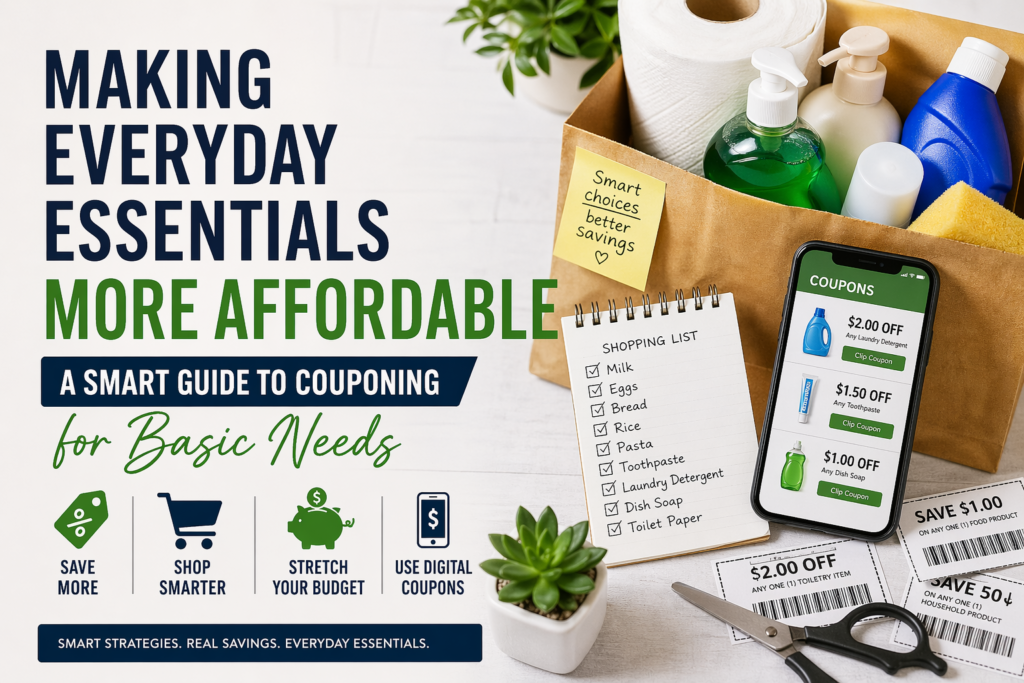
Everyday essentials are the items you keep buying no matter what: groceries, cleaning supplies, toilet paper, personal care products, baby items, pet food, basic health supplies, and household goods. These purchases may look small one by one, but together they can take a serious bite out of your monthly budget.
That is why smart couponing still matters in 2026. You do not need to become an extreme couponer, spend hours clipping deals, or buy products you do not need. The real goal is simple: pay less for the basics you already use.
According to the U.S. Bureau of Labor Statistics, average annual household expenditures in the United States reached $78,535 in 2024. The USDA Economic Research Service also reported that food prices in April 2026 were 3.2% higher than in April 2025. For many households, even small savings on repeated purchases can make a noticeable difference over time.
In this guide, you will learn how to use coupons, store apps, loyalty programs, cashback tools, and simple shopping habits to make everyday essentials more affordable without overcomplicating your routine.
Quick Summary: How to Save on Everyday Essentials
- Make a list of products you buy every month.
- Use coupons only for items you actually need.
- Match coupons with weekly store sales when possible.
- Join loyalty programs for grocery stores, pharmacies, and big retailers.
- Compare unit prices instead of only looking at the discount.
- Use cashback apps carefully without letting rewards push you into extra spending.
- Stock up only when the product is non-perishable and the discount is real.
- Check trusted coupon pages like DealZenoHub before buying online.
What Counts as an Everyday Essential?
Everyday essentials are products you use regularly and would likely buy even without a sale. These are different from impulse purchases, trendy products, or items you buy only because they are discounted.
Common everyday essentials include:
- Groceries and pantry staples
- Cleaning products
- Laundry detergent
- Toilet paper and paper towels
- Soap, shampoo, toothpaste, and deodorant
- Baby diapers, wipes, and formula
- Pet food and pet care basics
- Basic medicine and health supplies
- School and office supplies
- Household items such as trash bags, batteries, and storage bags
The best couponing strategy starts with these repeat purchases. If you save $2 on something you buy every month, that matters more than saving $20 on something you did not need in the first place.
Why Couponing Still Works in 2026
Couponing has changed. It is no longer only about newspaper inserts or paper coupons. Today, many savings come from digital promo codes, store apps, loyalty accounts, cashback offers, browser extensions, email discounts, and automatic checkout deals.
The Federal Trade Commission recommends looking for online coupon codes and comparing prices before buying online. That advice is especially useful for everyday essentials because many stores sell similar products, but final prices can vary after coupons, shipping fees, subscription discounts, and rewards are included.
If you shop online often, you can also read our guide on how to find working coupon codes in 2026 before placing your next order.
Step 1: Build a List of Products You Already Buy
The biggest mistake beginners make is searching for random deals before they know what they actually need. That often leads to overspending.
Start by writing down the essentials you buy every week or every month. For example:
- Milk, eggs, rice, bread, coffee, pasta, and snacks
- Laundry detergent, dish soap, and surface cleaner
- Toothpaste, shampoo, body wash, and deodorant
- Diapers, wipes, or baby food
- Dog food, cat litter, or pet treats
Once you know your repeat purchases, couponing becomes much easier. You are no longer chasing discounts. You are lowering the cost of products already in your budget.
Step 2: Use Store Apps and Loyalty Programs
Many grocery stores, pharmacies, and big retailers now keep their best coupons inside their apps. These may include digital manufacturer coupons, personalized offers, loyalty points, member-only prices, birthday rewards, and limited-time discounts.
Before your next shopping trip, open the app for the store you plan to visit and clip offers for items on your list. This can take only a few minutes, but it can reduce your total at checkout.
Good places to check include:
- Grocery store apps
- Pharmacy apps
- Warehouse club apps
- Retailer loyalty programs
- Brand newsletters
- Store email promotions
Do not join every program at once. Start with the two or three stores where you already shop most often.
Step 3: Match Coupons with Weekly Sales
A coupon is useful, but a coupon combined with a sale is often much better.
For example, imagine your regular laundry detergent costs $12.99. The store lowers it to $10.99 for the week, and you also have a $2 digital coupon. Your final price becomes $8.99 before tax. That is a stronger deal than using the same coupon at full price.
This is the basic idea behind practical couponing:
- Check the weekly ad.
- Look for products you already buy.
- Clip digital coupons for those products.
- Compare the final price with other stores.
- Buy only what you can use before it expires.
If you want to lower food costs specifically, read our full guide on how to save money on groceries in 2026.
Step 4: Compare Unit Prices, Not Just Discounts
A coupon can make a product look cheaper, but the unit price tells you whether it is actually a good deal.
The unit price shows how much you pay per ounce, pound, count, or item. This matters because a smaller package with a coupon can still be more expensive than a larger store-brand version without a coupon.
| Product | Price | Size | Unit Price |
|---|---|---|---|
| Name-brand detergent with coupon | $8.99 | 46 oz | $0.20 per oz |
| Store-brand detergent | $10.49 | 75 oz | $0.14 per oz |
In this case, the store brand may still be the better value even though the name-brand product has a coupon.
Step 5: Use Cashback Apps Carefully
Cashback apps can help you save on groceries, household products, gas, online orders, and personal care items. But they work best when you use them after making your shopping list, not before.
The danger is simple: cashback offers can make you buy things you were not planning to buy.
If the item was already on your list, cashback is a bonus. If the item was not on your list, think twice.
You can also compare coupon tools in our guide to the best coupon apps and browser extensions in 2026.
Step 6: Know When to Stock Up
Stocking up can save money, but only when done correctly. It works best for products that do not expire quickly and that you use regularly.
Good stock-up items may include:
- Toilet paper
- Paper towels
- Laundry detergent
- Dish soap
- Trash bags
- Toothpaste
- Shampoo
- Canned food
- Pet food
Avoid stocking up on products you have never tried, products with short expiration dates, or items that take up too much space at home. Saving money should not create clutter or waste.
Best Coupon Strategies by Essential Category
| Category | Best Strategy | Mistake to Avoid |
|---|---|---|
| Groceries | Match coupons with weekly sales and meal plans. | Buying food that does not fit your meals. |
| Cleaning supplies | Stock up during promotions on products you already use. | Buying too many specialty cleaners. |
| Personal care | Use store rewards, brand coupons, and loyalty discounts. | Ignoring expiration dates or product size. |
| Baby products | Combine loyalty points, subscriptions, and digital coupons. | Waiting until you run out before shopping. |
| Pet supplies | Compare subscription discounts with one-time coupon offers. | Forgetting to cancel or adjust auto-ship orders. |
| Household basics | Buy in bulk only when the unit price is lower. | Assuming larger packs are always cheaper. |
Where to Find Coupons for Everyday Essentials
There are several reliable places to look for coupons before buying everyday products:
1. Store Websites and Apps
Retailers often place digital coupons inside their own apps. These can include weekly offers, member-only prices, and personalized deals based on your shopping history.
2. Brand Websites
Brands sometimes offer printable coupons, email signup discounts, free samples, or loyalty rewards. This works especially well for personal care, cleaning, baby, and pet products.
3. Coupon Websites
Coupon websites help shoppers find promo codes, discount codes, and store deals in one place. At DealZenoHub, we organize coupon pages and shopping guides to help users compare savings before checkout.
You can start from the DealZenoHub homepage or search for a specific store before buying.
4. Email Newsletters
Many retailers give first-order discounts or early access to sales through email. Use a separate shopping email address if you do not want your main inbox to become crowded.
5. Browser Extensions
Browser extensions can automatically test coupon codes at checkout. They are useful, but you should still compare the final price manually because extensions may not always find the best available offer.
A Simple Weekly Couponing Plan
If you are new to couponing, keep the process simple. Here is a realistic weekly plan:
- Write your grocery and household essentials list.
- Check what you already have at home.
- Open your main store app and clip relevant digital coupons.
- Check the weekly sale ad.
- Compare prices for expensive items like detergent, diapers, pet food, and paper products.
- Search for online promo codes if you are ordering from a retailer website.
- Buy only what fits your list, storage space, and budget.
This method is not extreme, but it is sustainable. That matters more than saving a lot one week and giving up the next.
Common Couponing Mistakes to Avoid
Couponing can save money, but only when used with discipline. Avoid these common mistakes:
- Buying things only because they are discounted: A deal is not a deal if you do not need the product.
- Ignoring the final price: Shipping, taxes, fees, and minimum order rules can reduce the value of a coupon.
- Forgetting expiration dates: Some coupons expire quickly, especially app-based offers.
- Assuming name brands are always better: Store brands can sometimes offer better value.
- Not checking coupon terms: Some promo codes apply only to selected products, new customers, or minimum purchases.
- Letting subscriptions run automatically: Auto-ship discounts are useful only if you still need the product.
If a coupon code fails at checkout, read our guide on why coupon codes do not work and what to check first.
How Much Can You Realistically Save?
Your savings depend on where you shop, what you buy, and how consistent you are. Couponing will not remove the cost of everyday essentials completely, but it can help reduce wasteful spending and lower repeated costs.
A realistic goal is not to save 90% on every order. A better goal is to save a small amount consistently on products you already need. For example, saving $10 to $25 per week on groceries, cleaning supplies, and household basics can add up over the course of a year.
The key is consistency. Small savings become meaningful when they happen every week.
Final Thoughts: Couponing Works Best When It Supports Your Real Budget
Coupons are not magic, but they are useful when combined with smart shopping habits. The best strategy is to focus on everyday essentials, compare unit prices, use loyalty programs, stack discounts when possible, and avoid buying products just because they are on sale.
In 2026, saving money on basic needs is not about being cheap. It is about being intentional. If you already need groceries, household items, cleaning supplies, personal care products, baby essentials, or pet supplies, a few minutes of coupon checking can help you keep more money in your pocket.
For more practical savings ideas, read our guide to 20 smart money habits to save more money.
Frequently Asked Questions
Are coupons still worth using in 2026?
Yes. Coupons are still worth using when they apply to products you already planned to buy. Digital coupons, store app offers, loyalty rewards, and promo codes can help lower the cost of groceries, household supplies, personal care items, and other essentials.
What is the best way to coupon for groceries?
The best way to coupon for groceries is to plan your meals first, check your pantry, clip digital coupons for items on your list, and match those coupons with weekly store sales. Avoid buying food only because it has a discount.
Should I use cashback apps for everyday essentials?
Cashback apps can be useful, but only if the product was already on your shopping list. If a cashback offer pushes you to buy something unnecessary, it is not really saving you money.
Is buying in bulk always cheaper?
No. Buying in bulk is cheaper only when the unit price is lower and you can use the product before it expires. Always compare price per ounce, count, pound, or item before buying the larger package.
Where can I find working coupon codes?
You can find working coupon codes through retailer websites, store apps, email newsletters, browser extensions, and coupon sites like DealZenoHub. Before using a code, check the terms, expiration date, minimum spend, and product restrictions.