

Daily costs matter, but airfare and trip length can change which destination is the best value from the United States. AI-generated editorial image created for DealZenoHub.
For Americans planning an international trip in 2026, the best values are concentrated in Southeast Asia, inland Mexico and Central America, parts of South America, the Balkans, Turkey, and North Africa. Vietnam can work on about $30-$50 per traveler per day, while Mexico may cost more after arrival but produce a cheaper total trip because flights from the United States are usually shorter and easier to find.
The daily budgets below exclude international airfare. They assume two people share a clean private room, eat mostly local or casual meals, use public transportation, and choose one inexpensive activity. This is comfortable budget travel, not a claim that everyone can travel on a few dollars a day. A destination that is cheap on the ground may still be expensive from your airport, so compare the complete trip before choosing.
In this guide
- Quick picks for U.S. travelers
- Destination comparison
- How we estimated the budgets
- 15 destination profiles
- How airfare changes the answer
- How to keep costs down
- Common budget mistakes
- FAQ and sources
Quick Picks for U.S. Travelers
| Best overall on-the-ground value: VietnamBest for inexpensive food: Vietnam and MalaysiaBest beach value: Albania in June or SeptemberBest Europe on a budget: Bulgaria for cities; Albania for coastBest shorter trip from the U.S.: MexicoBest for a longer stay: Vietnam or MalaysiaBest for many first-time international travelers: Mexico; Thailand if you can accept the long flight |
Quick Comparison: 15 Best-Value International Destinations
The numbering is for navigation only. This is not a definitive cheapest-to-most-expensive ranking; airfare, route, season, and travel style can reverse the order.
| Destination | Best for | Budget daily range | Budget-comfort range | Best-value months | Flight reality from the U.S. | Main trade-off |
| Vietnam: Hanoi and Hoi An | Food and long stays | $30-$50 | $60-$95 | March-April; September-November | One limited nonstop gateway; otherwise one stop | Very long trip |
| Thailand: Bangkok and Chiang Mai | Easy Asia itinerary | $40-$65 | $80-$130 | Late October-November; February | Usually one stop | Islands can be costly |
| Malaysia: Kuala Lumpur and Penang | Hawker food and transit | $45-$70 | $85-$130 | February-March; June-July | Usually one stop | Rain varies by coast |
| Cambodia: Siem Reap and Phnom Penh | History | $35-$55 | $70-$110 | November; February | At least one connection | Angkor pass is extra |
| Indonesia: Yogyakarta and inland Bali | Culture and warm weather | $40-$65 | $80-$125 | April-May; September-October | Usually one stop | Island transfers add up |
| Sri Lanka: Kandy and the south | Rail, coast, wildlife | $40-$65 | $80-$125 | Region-dependent | One or two stops | Two monsoon patterns |
| Mexico: Oaxaca and Mexico City | Shorter U.S. trip | $55-$85 | $105-$160 | May-June; September-October | Many U.S. gateways | Prices vary sharply |
| Guatemala: Antigua and Lake Atitlán | Culture and scenery | $40-$65 | $75-$120 | November; February-March | Good hub access | Road transfers are slow |
| Colombia: Bogotá, Medellín, coffee region | Cities and variety | $45-$70 | $85-$135 | February-March; August | Best from Florida and hubs | Weather is regional |
| Bolivia: La Paz, Sucre, Uyuni | Lowest South America costs | $35-$55 | $70-$110 | April-May; September-October | Limited nonstop access | Altitude and disruptions |
| Albania: Tirana, Berat, Riviera | Affordable Mediterranean | $45-$70 | $90-$140 | May-June; September | Usually a European connection | July-August coast surge |
| Bulgaria: Sofia and Plovdiv | Budget city breaks | $50-$75 | $90-$140 | April-May; September-October | Usually one stop | No U.S. nonstop |
| Turkey: Istanbul and Izmir | History and food | $55-$85 | $100-$160 | April-May; September-October | Nonstops from major hubs | Fast-changing prices |
| Morocco: Marrakech and Essaouira | North Africa access | $45-$70 | $90-$145 | March-April; October-November | Select U.S. nonstops | Desert tours cost extra |
| Egypt: Cairo and Luxor | Ancient sites | $40-$65 | $80-$130 | October-November; February-March | Select nonstop gateways | Headline sites raise costs |
Budget ranges are per traveler, per day, with two people sharing a private room. They include lodging, local or casual meals, public transportation, one inexpensive activity, and basic incidentals. They exclude international airfare, travel insurance, visas or entry fees, alcohol, shopping, private drivers, luxury tours, expensive nightlife, and major one-time excursions.
How We Estimated These Budgets
| Research date: July 18, 2026. We started with traveler-reported cost data and accommodation-market observations from Budget Your Trip, then checked city and regional differences, official transport or attraction pages where useful, route availability, and current USD currency conversion. The ranges are editorial planning estimates, not quoted package prices. Accommodation assumption: Two adults share a clean private guesthouse, hostel room, or simple hotel. Solo travelers who require a private room should usually add $10-$35 per day, depending on the market. The budget-comfort range uses a well-reviewed midrange room, more sit-down meals, occasional ride-share use, and paid sights. Why your total will vary: Exchange rates, neighborhood, holidays, local events, booking lead time, taxes, and weather all matter. We converted and rounded into U.S. dollars rather than creating false precision. Check live prices before paying. |
1. Vietnam: Hanoi and Hoi An
Vietnam combines low costs, good transport, and exceptional food. Daily cost: $10-$20 room share + $9-$14 food + $3-$5 transit + $8-$11 activities/incidental = $30-$50; comfort is $60-$95. That deliberately exceeds the $24 traveler-reported budget benchmark in current Vietnam cost data.
When and flights: May-September is often cheaper but hot or wet; March-April and parts of September-November balance price and weather, depending on region. SFO has a limited Ho Chi Minh City nonstop; most Americans connect in East Asia.
Save locally: Use Hanoi’s public buses and walk the Old Quarter instead of treating every short trip as a ride-hail. The catch: moving north to south too quickly adds flights or overnight transport. Best for: food-focused travelers and stays of 10 days or more.
2. Thailand: Bangkok and Chiang Mai
Thailand offers abundant lodging, inexpensive meals, and easy logistics. Daily cost: $14-$25 lodging + $12-$20 food + $4-$8 transit + $10-$12 activities/incidental = $40-$65; comfort is $80-$130. Chiang Mai is far cheaper than Phuket or Railay in this city comparison.
When and flights: Late October-November and February balance price and weather; May-October is wetter and cheaper. U.S. itineraries normally connect, so West Coast travelers should compare several East Asian gateways.
Save locally: Build a Bangkok-Chiang Mai itinerary instead of adding multiple island ferries. The catch: famous islands can double lodging and transportation costs. Best for: first-time Asia visitors who value easy logistics.
3. Malaysia: Kuala Lumpur and Penang
Kuala Lumpur rail and Penang hawker food make Malaysia comfortable on a moderate budget. Daily cost: $16-$28 lodging + $13-$20 food + $4-$7 transit + $12-$15 activities/incidental = $45-$70; comfort is $85-$130. See Malaysia travel costs.
When and flights: Rain is year-round and monsoons differ by coast. February-March and June-July can suit Kuala Lumpur and Penang; check islands separately. U.S. trips generally require a connection, favoring longer stays.
Save locally: Choose lodging within walking distance of Rapid KL rail or George Town’s bus corridors. The catch: imported alcohol and resort islands are not budget items. Best for: travelers who prioritize food, urban comfort, and transit.
4. Cambodia: Siem Reap and Phnom Penh
Cambodia’s basics are inexpensive; Angkor is a separate one-time cost. Daily cost: $10-$18 lodging + $10-$15 food + $4-$7 transit + $11-$15 activities/incidental = $35-$55; comfort is $70-$110. The independent benchmark is about $26 in current cost data.
When and flights: November and February offer a good dry-season compromise; May-October is wetter and cheaper. Americans connect through Asia. Save: buy only through official Angkor Enterprise. Catch: a pass and driver exceed the range; check border guidance. Best for: regional history trips.
5. Indonesia: Yogyakarta and Inland Bali
Indonesia rewards slow travel in Yogyakarta, Java, and inland Bali. Daily cost: $12-$22 lodging + $10-$16 food + $5-$9 transit + $13-$18 activities/incidental = $40-$65; comfort is $80-$125. See Indonesia cost data.
When and flights: April-May and September-October edge the Java/Bali dry season; November-March is wetter and cheaper. Other islands differ. U.S. travelers normally connect in Asia.
Save locally: Pick one island or a Java-Bali rail-and-ferry route instead of buying several domestic flights. The catch: Bali traffic can make a cheap outlying room expensive in time and car fares. Best for: slow travelers who want culture plus warm weather.

Local food and public transportation keep Southeast Asian daily costs manageable. AI-generated editorial image created for DealZenoHub.
6. Sri Lanka: Kandy, the Cultural Triangle, and the South
Sri Lanka packs rail, beaches, tea country, history, and wildlife into one trip. Daily cost: $12-$22 lodging + $10-$16 food + $5-$9 transit + $13-$18 activities/incidental = $40-$65; comfort is $80-$125. Some foreigner admissions are substantially higher; see Sri Lanka costs.
When and flights: The southwest generally favors December-March; the east May-September. Americans usually make one or two connections, making 10-14 days more sensible than one week.
Save locally: Reserve popular scenic trains through the official Sri Lanka Railways portal, not a marked-up lookalike. The catch: reserved seats can sell out, and a private driver changes the budget completely. Best for: travelers who want varied scenery in one country.
7. Mexico: Oaxaca and Mexico City
Mexico can yield the cheapest total U.S. trip, but resort corridors cost far more than Oaxaca. Daily cost: $20-$32 lodging + $18-$26 food + $5-$10 transit + $12-$17 activities/incidental = $55-$85; comfort is $105-$160. Country data confirms sharp city differences.
When and flights: May-June and September-October reduce prices with rain/heat trade-offs. Many U.S. cities have nonstops; Oaxaca has fewer gateways. Save: stay near Metro/Metrobús. Catch: resort and holiday pricing; read the state-specific advisory. Best for: shorter U.S. trips.
8. Guatemala: Antigua and Lake Atitlán
Guatemala combines U.S. proximity with guesthouse value, colonial towns, and volcano scenery. Daily cost: $12-$22 lodging + $11-$17 food + $4-$8 transit + $13-$18 activities/incidental = $40-$65; comfort is $75-$120. See Guatemala costs.
When and flights: November and February-March offer dry-season value outside major holidays; May-October is wetter. Guatemala City has nonstops from several U.S. hubs.
Save locally: Base yourself in one Lake Atitlán village instead of paying repeated private boat transfers. The catch: mountain roads make short distances slow, and the airport transfer belongs in your trip budget. Best for: culture and landscape on a one-week trip.
9. Colombia: Bogotá, Medellín, and the Coffee Region
Bogotá, Medellín, and coffee towns offer value; Cartagena costs more. Daily cost: $15-$25 lodging + $12-$18 food + $4-$8 transit + $14-$19 activities/incidental = $45-$70; comfort is $85-$135. See Colombia cost data.
When and flights: February-March and August can work, but altitude and region drive weather. Nonstops are strongest from South Florida and major hubs; other Americans usually connect.
Save locally: Use integrated metro and cable-car transit in Medellín instead of building days around ride-hails. The catch: adding Cartagena or several domestic flights raises the average quickly. Best for: travelers who want city life and countryside in one trip.
10. Bolivia: La Paz, Sucre, and Uyuni
Bolivia’s ordinary costs are low, but altitude and Uyuni tours raise the trip total. Daily cost: $10-$18 lodging + $9-$14 food + $4-$7 transit + $12-$16 activities/incidental = $35-$55; comfort is $70-$110. See Bolivia cost data.
When and flights: April-May and September-October balance the drier season and demand; December-March is wetter. U.S. nonstops are limited and centered on South Florida/Santa Cruz.
Save locally: Compare Uyuni operators on inclusions-accommodation, park entry, water, and drop-off-rather than choosing the lowest headline price. The catch: altitude and road disruptions require schedule padding; check current official guidance. Best for: experienced travelers with flexible time.
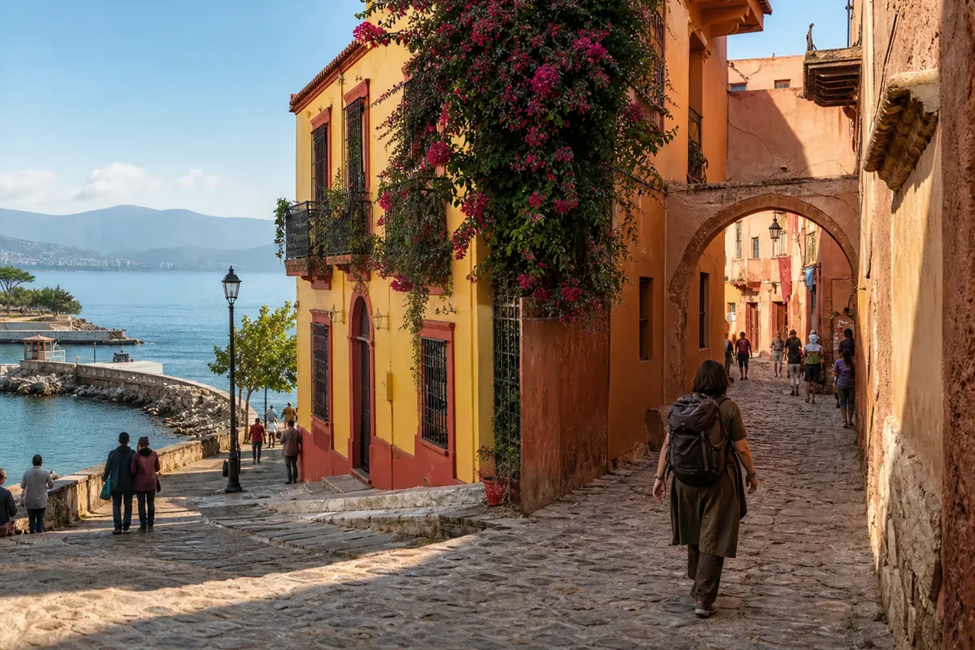
Shoulder-season coastlines and second cities often deliver better value than famous peak-season districts. AI-generated editorial image created for DealZenoHub.
11. Albania: Tirana, Berat, and the Riviera
Albania offers Mediterranean value outside the July-August Riviera surge. Daily cost: $18-$28 lodging + $14-$20 food + $5-$8 transit + $8-$14 activities/incidental = $45-$70; comfort is $90-$140. The budget benchmark is near $44 in Albania cost data.
When and flights: May-June and September bring warm weather below peak demand. Most Americans connect in Europe; East Coast positioning can matter.
Save locally: Pair Tirana and Berat with one coastal base instead of changing beaches every night. The catch: buses are useful but schedules and stations can be less intuitive than Western European rail. For a price contrast, see DealZenoHub’s guide to planning a much more expensive Switzerland trip. Best for: Mediterranean scenery on a European budget.
12. Bulgaria: Sofia and Plovdiv
Bulgaria delivers affordable museums, cafes, transit, and guesthouses. Daily cost: $18-$28 lodging + $14-$20 food + $5-$8 transit + $13-$19 activities/incidental = $50-$75; comfort is $90-$140. The traveler benchmark starts near $35 in Bulgaria trip costs.
When and flights: April-May and September-October suit cities; ski regions differ. Sofia has no U.S. nonstop, so most Americans connect through Europe or Istanbul.
Save locally: Stay inside Sofia’s metro network and make Plovdiv a rail or bus add-on. The catch: a cheap fare with separate tickets can become risky if the first flight is delayed. Best for: history-focused European city breaks.
13. Turkey: Istanbul and Izmir
Turkey pairs excellent food and transit with volatile prices. Daily cost: $20-$32 lodging + $15-$22 food + $6-$10 transit + $14-$21 activities/incidental = $55-$85; comfort is $100-$160. The independent benchmark starts near $50 in Turkey cost data.
When and flights: April-May and September-October balance conditions; winter is cheaper. Istanbul has nonstops from many major U.S. gateways, an advantage over the Balkans.
Save locally: Use Istanbulkart on ferries, metro, and trams; verify current fares on the Istanbul municipality fare page. The catch: museum admissions and Cappadocia balloons are not “cheap daily activity” items. Check the latest advisory for the exact region. Best for: travelers wanting deep history without a complicated air itinerary.
14. Morocco: Marrakech and Essaouira
Morocco offers guesthouse, meal, train, and bus value. Daily cost: $16-$26 lodging + $12-$18 food + $5-$8 transit + $12-$18 activities/incidental = $45-$70; comfort is $90-$145. The budget benchmark is near $34 in Morocco trip costs.
When and flights: March-April and October-November avoid extreme inland heat. Select U.S. gateways have nonstops; see the Embassy route page.
Save locally: Take ONCF rail between connected cities and a reputable intercity bus to Essaouira instead of a private car. The catch: desert excursions and medina transfers must be priced separately. Best for: East Coast travelers seeking a distinctive one-week trip.
15. Egypt: Cairo and Luxor
Egypt’s basics are inexpensive, but archaeological sites change the total. Daily cost: $14-$24 lodging + $10-$16 food + $4-$7 transit + $12-$18 activities/incidental = $40-$65; comfort is $80-$130. Bare-budget data runs lower, but current hotel observations are higher; see Egypt costs.
When and flights: October-November and February-March are comfortable; summer is cheaper but extremely hot inland. Select U.S. gateways have Cairo nonstops; most travelers connect.
Save locally: Check prices and inclusions on the official Giza Plateau page before buying a tour. The catch: Giza, the Grand Egyptian Museum, Luxor sites, guides, and Nile transport can exceed the everyday budget. Review the current U.S. advisory, including areas not recommended for travel. Best for: history travelers who budget attractions separately.
How Airfare Changes the Answer for Americans
Your departure airport can matter more than a $15 difference in daily costs. East Coast travelers often have better access to Europe, Turkey, and North Africa; West Coast travelers have more practical routings to East and Southeast Asia; and Florida, Texas, Atlanta, and Southern California can be useful for Mexico, Central America, and northern South America. These are tendencies, not guarantees.
Compare nearby airports and the final ticket, not the advertised base fare. A positioning flight can unlock a lower long-haul fare, but separate tickets create missed-connection risk and may require collecting and rechecking bags. Add checked baggage, carry-on rules, seat selection, airport transfers, an overnight layover, and meals before declaring one itinerary cheaper.
Use Google Flights to compare date grids and nearby airports, then check the airline’s own terms. If you also compare online travel agencies, review the final checkout price and cancellation rules; DealZenoHub maintains pages for current Expedia booking offers and Trip.com travel deals. A discount is useful only when the same itinerary and terms still cost less.
Remember the non-ticket costs: a first passport or renewal, destination entry fees, a visa where required, travel insurance, and transport to your U.S. departure airport. Entry rules and advisories can change between planning and departure; use the U.S. State Department destination directory before booking and again before travel.

Compare the complete trip cost, including airfare, insurance, transfers, and booking fees. AI-generated editorial image created for DealZenoHub.
How to Keep an Affordable Trip Affordable
- Book the shoulder, not the worst weather. A slightly higher room rate during a drier shoulder month can be better value than losing beach or sightseeing days to rain or heat.
- Map accommodation before paying. The cheapest room can lose its advantage when it is far from transit, safe evening routes, or the sights you will visit.
- Price the airport transfer. Check public transit hours and official taxi or ride-hail options, especially for late arrivals.
- Control mobile-data costs. Compare your carrier’s roaming pass with a local SIM or eSIM, including activation fees and hotspot limits.
- Use a no-foreign-transaction-fee card when possible. At ATMs, prefer a bank-network machine and decline dynamic currency conversion so your bank handles the conversion.
- Audit baggage rules in both directions. Low-cost and regional carriers may charge separately for a cabin bag, checked bag, seat, and airport check-in.
- Buy insurance for the risk, not the destination’s room price. Medical care, evacuation, cancellation, and interruption exposure can be substantial even on a cheap trip.
- Do the pass math. Attraction or transit passes save money only if you will use the included entries; compare individual official prices first.
- Hold a refundable room while watching prices. Read the cancellation deadline in the property’s local time and compare the full total, including taxes and cleaning fees.
Before buying luggage, adapters, or packing organizers, use the vacation essentials checklist. For more planning content, browse DealZenoHub’s Travel guides.
Common Budget Mistakes
- Choosing the cheapest room without checking its distance from public transportation.
- Ignoring taxes, cleaning charges, resort fees, or mandatory property payments.
- Arriving during a festival, national holiday, major conference, or school break.
- Assuming every region of a large country costs the same as its cheapest city.
- Buying a low-cost flight before adding baggage, seats, and airport transfers.
- Overpacking a short itinerary with costly domestic flights and one-night stays.
- Forgetting that a late arrival can eliminate public transit and force an expensive transfer.
Final Recommendations
For the lowest ordinary daily costs, start with Vietnam, Bolivia, Cambodia, or Egypt-but price the flight and headline activities before committing. Mexico has the best potential for a low total trip from many U.S. cities. Bulgaria is the clearest affordable urban option in Europe, while Albania wins for a shoulder-season coast. Vietnam is the strongest long-haul value, Malaysia is the easiest food-and-transit combination, and Albania or Sri Lanka can deliver beach value when you choose the correct coast and month.
Frequently Asked Questions
What is the most affordable international destination from the United States?
For many Americans, Mexico has the lowest total-trip potential because airfare and travel time can be lower. Vietnam, Cambodia, Bolivia, and Egypt may cost less per day after arrival. Your home airport and dates decide the winner.
How much should an American budget per day for an international trip?
For the destinations in this guide, allow roughly $35-$85 per traveler for comfortable budget travel or $70-$160 for budget-comfort. Add international airfare, insurance, entry costs, and major excursions separately.
Which affordable destination is easiest to reach from the U.S.?
Mexico generally has the broadest nonstop access. Guatemala and Colombia are also practical from several hubs. Route convenience changes by airport, so compare a nearby gateway before deciding.
Are cheap travel destinations safe?
Price does not determine safety. Risk can vary by city, neighborhood, road, season, and current event. Read the latest State Department advisory and local official guidance, and avoid treating any country as completely safe.
Is airfare included in the daily budgets?
No. The ranges include accommodation, meals, local public transportation, one inexpensive activity, and incidentals. They exclude round-trip international airfare, insurance, visas, alcohol, shopping, and major tours.
When should I book an international trip for lower prices?
Begin tracking flights several months ahead and book accommodation earlier for holidays, festivals, and high season. There is no universal cheapest weekday. Use flexible-date tools and compare the final fare with all fees.
Is it cheaper to exchange money before leaving the United States?
Usually not for the full trip. A small arrival amount can be convenient, but a bank ATM and a no-foreign-transaction-fee card often produce a better effective rate. Decline dynamic currency conversion and check your bank’s fees.
Sources and Methodology
Travel-cost data
Vietnam; Thailand; Malaysia; Cambodia; Indonesia; Sri Lanka; Mexico; Guatemala; Colombia; Bolivia; Albania; Bulgaria; Turkey; Morocco; Egypt. These traveler-reported averages were treated as benchmarks, not copied as promises.
Transportation and route checks
Google Flights; San Francisco International Airport Asia routes; Turkish Airlines U.S. network; Morocco-U.S. flights; Sri Lanka Railways reservations; Istanbul public-transport fares.
Official tourism and attraction information
Angkor Enterprise ticket options; Egyptian Ministry of Tourism and Antiquities: Giza Plateau.
Entry and safety information
U.S. Department of State Travel Advisories, including the current destination pages linked above. Travelers should recheck entry requirements and advisories before booking and departure.
Currency and price verification
XE Currency Converter. USD ranges were rounded because card rates, ATM markups, and currency movements can change the traveler’s actual cost.
| Editorial and affiliate disclosure: These budgets are researched estimates. International airfare is excluded. Prices vary with season, exchange rates, destination area, events, and travel style. Entry rules and advisories can change; verify live prices and official guidance before booking. DealZenoHub may earn a commission from qualifying partner links, when applicable, without changing the reader’s price. Commercial relationships did not determine the destination selection or budget estimates. |