

You buy something today. Two days later, the same item is cheaper.
Annoying? Yes. Final? Not always.
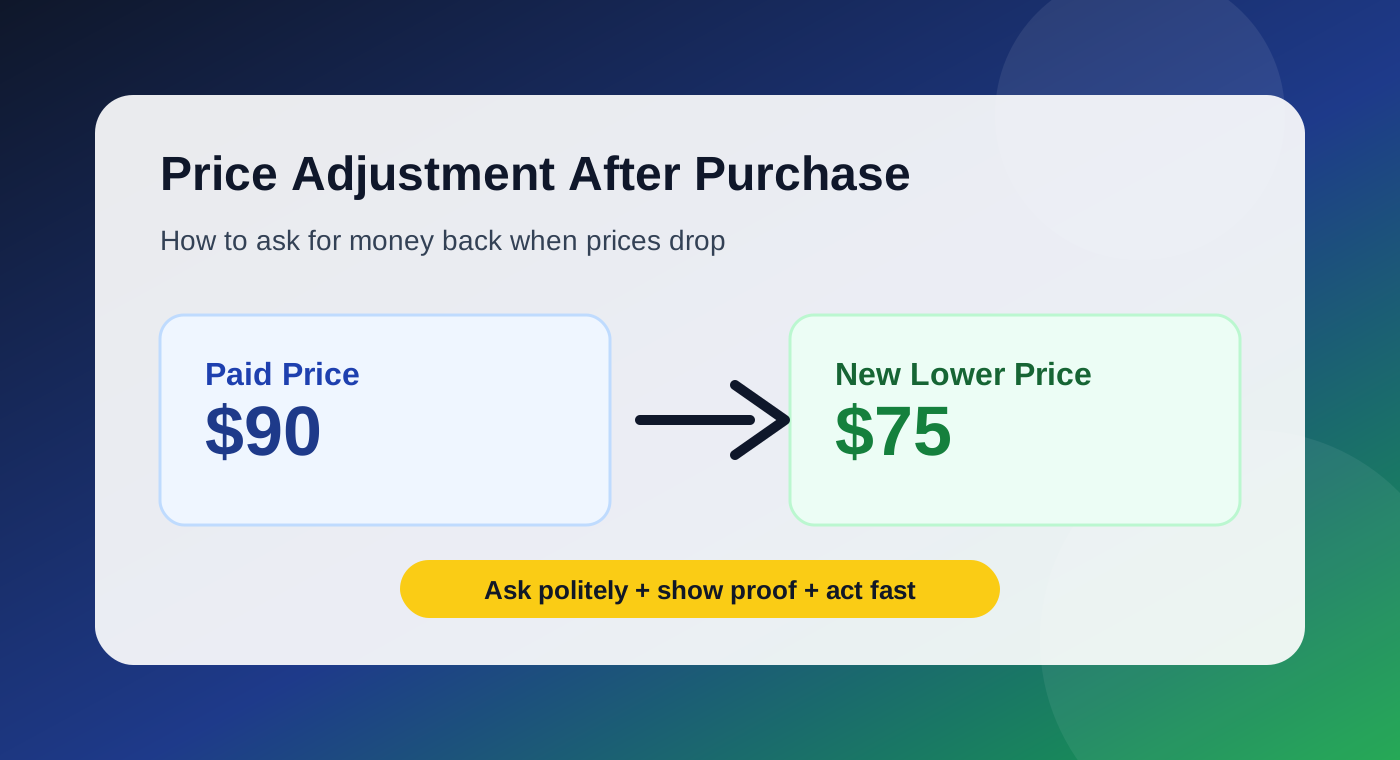
A price adjustment after purchase may help you get the price difference back when a store lowers the price shortly after you buy. It is not a guaranteed refund, and every store has its own rules, but it is worth checking before you accept the loss.
The key is simple: act quickly, compare the exact same item, and contact support with proof.
What Is a Price Adjustment After Purchase?
A price adjustment is when a store refunds the difference between what you paid and the new lower price.
Example: you buy a backpack for $90. Three days later, the same backpack drops to $70 on the same store website. If the store allows post purchase price adjustment, you may be able to ask for $20 back.
This is sometimes called a price protection refund or a refund price difference after purchase.
A store may only approve it if the lower price is from the same retailer, the item is identical, and the request is made inside the allowed time window.
Price Adjustment vs Price Match: What’s the Difference?
These two terms sound similar, but they are not the same.
Price adjustment: the same store lowers the price after you bought the item.
Price match: a store matches a lower price from another retailer before purchase, or sometimes after purchase if its policy allows that.

If you buy a jacket from Store A for $80 and Store A drops it to $60 two days later, that may qualify for a price adjustment.
If Store B sells the same jacket for $60 and you ask Store A to match Store B’s price, that is price matching.
Best Buy, for example, says its price match policy covers new items sold from Best Buy, excludes Marketplace products, clearance, refurbished, and open-box items, and requires the product to match by brand, model number, and color. Its policy also says that if Best Buy lowers its own in-store, online, or app price during the return and exchange period, it will match the lower price upon request. Best Buy policy.
How Long Do You Usually Have to Request a Price Adjustment?
The time window depends on the store.
Some retailers may allow 7 days. Others may allow 14 days, 30 days, or longer for selected products. Some stores offer no price adjustment policy at all.
This is why the best move is to check quickly after buying.
Do not wait until the return window is almost over. If the price dropped after I bought it, the first 24 to 72 hours are usually the best time to act.
Costco’s official customer service page says Costco.com purchases that reduce in price within 30 days may be eligible for a price match. It also says Costco does not price match with other businesses or retailers and does not match Costco warehouse prices for Costco.com purchases. Costco policy.
When Can You Usually Ask for a Price Adjustment?
A request is usually more reasonable when the lower price is clear and easy to verify.
- The exact same item dropped in price after purchase.
- The item is still in stock.
- The lower price appears on the same store website.
- You are within the allowed request window.
- You have the order number or receipt.
- The item was not final sale or clearance.
- The lower price is not from a third-party marketplace seller.
- The sale is public and not only for selected members.
Here is a real shopping example: you buy a coffee maker online for $129.99. Two days later, the same product page shows $109.99. Same model. Same color. Same seller. Still in stock. That is the type of situation where contacting support makes sense.
What Usually Disqualifies a Price Adjustment?
Stores often reject price adjustment requests when the comparison is not exact.
- Clearance items
- Final sale products
- Flash sales
- Doorbuster deals
- Black Friday or Cyber Monday offers
- Third-party marketplace sellers
- Used, refurbished, or open-box items
- Different model numbers
- Different sizes, colors, or versions
- Membership-only pricing
- Coupon-only price drops
- No proof of purchase
- Requests made after the policy window
Even if two products look the same, the store may check the SKU, model number, seller, and purchase channel.
Microsoft’s price protection page gives a good example of how detailed exclusions can be. Its policy mentions a one-time price adjustment on eligible physical products within 60 days of delivery, but excludes several types of offers, including marketplace prices, clearance, liquidation, refurbished or pre-owned items, flash sales, coupon offers, loyalty offers, promo codes, bundles, rebates, and more. Microsoft policy.
How to Request a Price Adjustment Step by Step

- Check the store’s current price adjustment policy.
- Confirm the lower price is for the exact same item.
- Make sure you are still within the request window.
- Save proof of the lower price.
- Copy your order number.
- Contact support by chat, email, or phone.
- Ask politely for a price adjustment.
- Confirm how the refund will be issued.
- Keep a copy of the support conversation.
The refund may go back to your original payment method, store credit, gift card, or another form depending on the store.
Price Adjustment Request Template
Hi, I recently purchased [product name] on [purchase date], and I noticed the price has dropped from [old price] to [new price]. My order number is [order number]. Am I eligible for a price adjustment for the difference? I can provide a screenshot or link to the current lower price if needed. Thank you.
Keep it simple. Mention the product, date, old price, new price, and order number. Ask clearly. Provide proof if requested.
Can You Get a Price Adjustment If You Used a Coupon Code?
Sometimes yes. Sometimes no.
If you used a coupon code, the store may calculate the adjustment based on the price you actually paid, not the original list price.
Example: the item was listed at $120. You used a coupon and paid $90. Later, the item drops to $85. If the store approves the request, your possible adjustment may be $5, not $35.
Some stores may also exclude coupon-based purchases from adjustments. Others may exclude promo codes, loyalty offers, or personalized discounts.
So when asking, compare the final paid price, not just the headline sale price.
When a Price Adjustment May Save More Than a Coupon
A coupon saves money before purchase. A price adjustment can help after purchase.
For example, you buy headphones today with a 10% coupon. Two days later, the store puts the same headphones on sale for 25% off. If the store allows a price adjustment, you may recover part of the difference.
Before buying, compare available offers on DealZenoHub coupon codes. You can also browse stores to check current promo codes and deals before checkout.
After buying, do not stop paying attention. Watch the item for a few days, especially around major sale periods.
How to Track Price Drops After Buying
- Keep the order confirmation email.
- Bookmark the product page.
- Check the price again after 24 to 48 hours.
- Recheck during major sales.
- Save proof if the price drops.
- Keep packaging and tags until you understand the return policy.
- Compare the final price after shipping, taxes, and discounts.
You can also use price tracking tools where available. Just remember that a tracking alert does not guarantee a refund. It only tells you the price changed.
For more checkout help, read why coupon codes don’t work and coupon code applied but total didn’t change.
Should You Return and Rebuy Instead?
If a store refuses a price adjustment, some shoppers think about returning the item and buying it again at the lower price.
Sometimes that works. Sometimes it is a waste of time.
- The price difference
- Return shipping cost
- Restocking fees
- Refund delay
- Product availability
- Lost coupon discounts
- Whether the item may sell out
- Whether the return policy allows it
Example: you saved $15 from the price drop, but return shipping costs $9 and the refund may take 10 business days. That may not be worth the effort.
Quick Checklist Before Contacting Support

Common Mistakes to Avoid
- Waiting too long
- Comparing different sellers
- Comparing similar but not identical products
- Forgetting taxes and shipping
- Asking without proof
- Assuming every store has a price adjustment policy
- Ignoring return fees
- Trusting old policy screenshots
- Confusing price match vs price adjustment
- Asking after removing tags or using the item heavily
The cleaner your proof, the easier the conversation.
Final Tip: The Lowest Final Price Matters Most
A price adjustment is useful only if it lowers what you actually paid.
A coupon, sale price, free shipping offer, store credit, or post-purchase price adjustment can all help. But the final price matters most.
Before buying, compare current coupons and deals. You can also check our guide to the best coupon apps and browser extensions if you want more ways to catch savings before checkout.
After buying, watch the price for a short period. If the price drops, ask politely and quickly.
FAQ
What does price adjustment after purchase mean?
It means a store may refund the price difference if an item becomes cheaper after you already bought it. The refund depends on the store’s current price adjustment policy.
Can I get money back if the price drops after I buy something?
Possibly. You need to check the store’s policy, confirm the exact same item dropped in price, and request the adjustment inside the allowed time window.
How many days do I have to request a price adjustment?
It varies by store. Some allow a short window such as 7 or 14 days. Others may allow 30 days or longer for selected products. Some stores do not offer adjustments at all.
Is price adjustment the same as price matching?
No. Price adjustment usually means the same store lowered its own price after your purchase. Price matching usually means asking a store to match a lower price from another retailer.
Can I request a price adjustment if I used a coupon?
Sometimes. The store may base the adjustment on the final price you actually paid after discounts. Some stores exclude coupon, promo code, or loyalty-based purchases from adjustments.
What should I do if the store refuses a price adjustment?
Ask politely if there are any other options, such as store credit. If not, compare the return-and-rebuy option, but only if the savings are worth the return cost, time, and risk.

Related Articles
Coupon Code Applied But Total Didn’t Change? Here’s Why
Last Updated: June 2026 | By DealZenoHub Team You found a coupon code, copied it, pasted it into the promo...
Read more
How to Save Money on Groceries in 2026: Simple Tips That Actually Work
Grocery shopping can quietly drain your budget. You walk into the store for “just a few things,” add snacks, drinks,...
Read more
Best Email Marketing Tools in 2026: Compare Prices, Plans, and Where to Save
Choosing an email marketing tool is rarely about finding a "bad" platform — most of the well-known names can send...
Read more