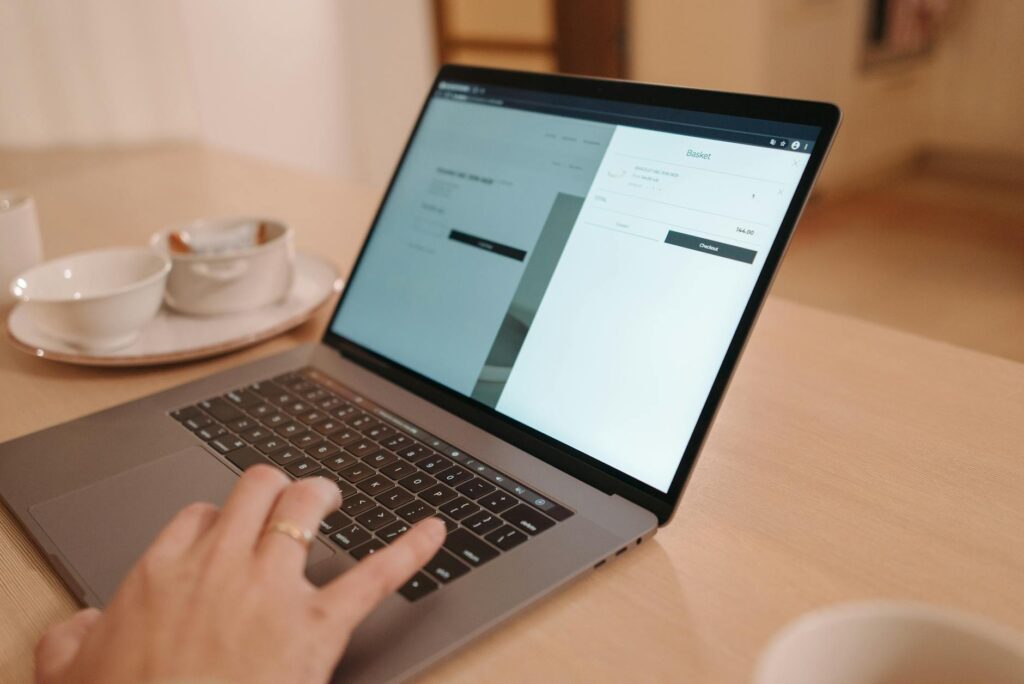
The product looked like a good deal.
It was marked down from $80 to $56, the reviews seemed positive, and the store advertised free returns. Then you reached checkout.
Shipping added $8.95. A handling fee appeared. Sales tax increased the total again. The estimated delivery date was later than expected, and the “free return” turned out to apply only to store credit.
The $56 deal was suddenly a $70 decision.
That moment explains much of what shoppers call cart abandonment. It is not always distraction, indecision or a failed sale. Sometimes the checkout page reveals information that should have been clear much earlier.
As someone who studies online discounts, checkout terms and the real cost behind promotional claims, I use one rule:
The value of a deal is determined by the final cost, delivery terms, return risk and product usefulness—not by the percentage in the sale banner.
This guide explains why Americans leave online carts, which checkout warnings deserve attention and when walking away is the financially smarter choice.
How Common Is Online Cart Abandonment?
Baymard Institute’s current collection of 50 ecommerce studies puts the average documented online cart abandonment rate at 70.22%.
That figure is a global average across different studies. It should not be interpreted as meaning that 70.22% of Americans reject a purchase because something went wrong.
A large portion of carts were never firm purchase decisions. Baymard’s research found that 42% of U.S. online shoppers had abandoned a cart because they were browsing or were not ready to buy. People also use carts to compare prices, save products, estimate shipping and organize gift ideas.
Once the “just browsing” group is separated, the leading preventable reasons become much more useful:
| Reason for Leaving Checkout | U.S. Shoppers Reporting It |
|---|---|
| Shipping, taxes or extra fees were too high | 40% |
| Delivery was too slow | 20% |
| The shopper did not trust the site with card information | 19% |
| The site required account creation | 18% |
| Checkout was too long or complicated | 17% |
| The website crashed or produced errors | 17% |
| The return policy was unsatisfactory | 13% |
| The total order cost was not visible upfront | 12% |
| The card was declined | 10% |
| There were not enough payment options | 9% |
These percentages come from shoppers who had moved beyond casual browsing. They show that checkout abandonment is often a rational response to price, risk or friction—not simply a lack of interest.
1. The Final Price No Longer Matches the Deal
Extra costs are the biggest preventable reason shoppers abandon checkout.
The problem is not always that shipping or tax exists. Shoppers generally understand that delivery has a cost and that sales tax may apply.
The problem is discovering those costs too late.
Consider this example:
| Checkout Item | Cost |
|---|---|
| Original product price | $80.00 |
| Advertised 30% discount | −$24.00 |
| Discounted price | $56.00 |
| Shipping | $8.95 |
| Handling fee | $2.50 |
| Estimated sales tax | $4.85 |
| Final total | $72.30 |
The banner says “Save 30%,” but the shopper is paying only $7.70 less than the original $80 price.
That does not automatically make the purchase bad. Shipping and tax are real costs. But it does mean the headline discount exaggerates the practical saving.
My final-price test
Before buying, compare:
- The total after the discount.
- Shipping and service fees.
- Sales tax.
- Cashback you are genuinely eligible to receive.
- The cost at one or two competing retailers.
- The cost of returning the item if it does not work out.
Do not compare one store’s checkout total with another store’s product-page price. Compare final total against final total.
For a broader method, use our complete guide to saving money while shopping online.
2. Free-Shipping Thresholds Encourage Overspending
Free shipping can save money when the items were already planned. It becomes expensive when the threshold controls the purchase.
Suppose your cart contains a $28 item:
- Standard shipping costs $7.
- Free shipping begins at $50.
- You add another $24 of products to avoid the $7 charge.
- Your new total is $52 instead of $35.
You did not save $7. You spent an additional $17.
The correct comparison is not:
“Can I qualify for free shipping?”
It is:
“Is buying more cheaper than paying for delivery?”
Adding an item can make sense when it is a household product you were going to buy soon, the price is competitive and it will not expire. Random accessories, travel-size products and low-quality fillers rarely pass that test.
When paying for shipping is smarter
Pay the delivery charge when:
- The extra products are unnecessary.
- The alternative items cost more than the shipping fee.
- You are uncertain about their quality.
- Adding them complicates the return.
- A competing retailer has a lower final price.
Free shipping is a fulfillment offer, not proof of a better deal.
3. Delivery Is Too Slow for the Purchase to Be Useful
An item arriving after the date you need it has little value, regardless of the discount.
Baymard found that 20% of U.S. shoppers in its preventable-abandonment group left because delivery was too slow.
This matters most for:
- Birthday and holiday gifts
- Travel supplies
- Event clothing
- Replacement electronics
- School materials
- Medical or wellness products
- Auto and home-repair parts
Before paying, check whether the page shows:
- A processing time
- A shipping time
- An estimated delivery date
- Whether weekends are counted
- Where the product ships from
- Whether all cart items ship together
- Tracking availability
“Ships in three days” does not necessarily mean “arrives in three days.” It may mean the seller takes three days to hand the package to the carrier.
The Federal Trade Commission says sellers must ship within the time stated in their advertising. When no shipping time is stated, the seller generally must ship within 30 days or obtain the buyer’s agreement to a delay. (FTC online-shopping guidance)
Expert decision rule
When timing matters, a confirmed delivery date can be more valuable than an extra 10% discount.
Paying slightly more to a reliable seller may be the cheaper outcome if the alternative forces you to buy a replacement locally after the first order arrives late.
4. The Return Policy Transfers Too Much Risk to You
A low price is less valuable when the purchase is difficult or expensive to return.
This is particularly important for:
- Clothing and shoes
- Furniture
- Mattresses
- Electronics
- Auto parts
- Beauty products
- Personalized items
- Marketplace purchases
- Clearance merchandise
NRF estimated that 19.3% of online sales would be returned in 2025, while 82% of consumers said free returns were an important consideration when shopping online.
That does not mean every retailer must offer unlimited free returns. It means return terms have become part of the product’s true cost.
Read these details before buying
Check:
- How many days you have to start a return.
- Whether the countdown begins at purchase, shipment or delivery.
- Whether discounted products are final sale.
- Who pays return shipping.
- Whether there is a restocking fee.
- Whether refunds go to the original payment method.
- Whether the store provides only credit.
- Whether opened products are eligible.
- Whether the item must be returned to another country.
- Whether marketplace sellers follow separate rules.
A return-cost example
Imagine two stores selling the same shoes:
| Store A | Store B | |
|---|---|---|
| Product price | $60 | $68 |
| Outbound shipping | Free | Free |
| Return shipping | $12 | Free |
| Refund method | Store credit | Original payment |
| Final risk if fit is wrong | High | Lower |
Store A looks cheaper until the shoes do not fit.
For fashion purchases, our guide to the best clothing-shopping apps in the United States compares sizing help, seller structure and return convenience—not just advertised prices.
5. The Website Has Not Earned Your Payment Information
Trust is not a decorative badge near the Buy button. It is the result of clear business information, consistent policies and a checkout that behaves normally.
Baymard found that 19% of U.S. shoppers in its preventable-abandonment group left because they did not trust the website with their card information.
That hesitation is justified when a store has:
- No verifiable business identity
- No working contact method
- Copied or poorly written policies
- Unrealistically low prices
- Recently created social profiles
- Only perfect on-site reviews
- A misspelled or suspicious domain
- Conflicting company names
- No clear return address
- Pressure to use an unusual payment method
HTTPS does not prove legitimacy
A secure connection is necessary when entering payment information, but the lock icon alone does not prove that the seller is genuine. The FTC explicitly notes that scammers can also encrypt fraudulent websites.
Before ordering from an unfamiliar retailer:
- Search the store name and domain with terms such as “reviews,” “complaints” and “scam.”
- Read reviews from more than one independent source.
- Check how long the company appears to have operated.
- Look for real contact and return information.
- Reverse-search suspicious product photos when necessary.
- Compare the price with established retailers.
- Read recent negative reviews, not only the average score.
The FTC recommends paying by credit card when possible because federal protections can allow shoppers to dispute certain billing errors, undelivered merchandise, incorrect items and defective products.
A digital wallet may reduce the amount of card information shared directly with the seller, but dispute and purchase protections can depend on the wallet, the underlying payment method and the transaction.
Never continue with a seller that insists on payment by gift card, wire transfer or cryptocurrency. The FTC identifies those demands as major scam warnings.
6. The Store Forces You to Create an Account
Account creation is reasonable for loyalty programs, subscriptions and services that require an ongoing customer relationship.
It should not feel mandatory for a simple one-time purchase.
Baymard found that 18% of U.S. shoppers in the preventable-abandonment group left because the website wanted them to create an account.
From a shopper’s perspective, mandatory registration creates several concerns:
- Another password to manage
- More promotional emails
- More personal information stored
- Extra checkout steps
- Unclear membership terms
- The possibility of accidental subscription enrollment
Guest checkout is usually the cleaner option for an occasional purchase.
Before joining a membership
Check whether:
- The account is free.
- A trial converts into a paid subscription.
- The discount applies immediately.
- The membership renews automatically.
- Cancellation can be completed online.
- Your saved payment method will be used for future charges.
Do not exchange long-term recurring charges for a small one-time discount.
7. The Checkout Is Too Long, Confusing or Broken
A shopper should not need to solve a form to buy an ordinary product.
Baymard reports that 17% of U.S. shoppers abandoned because checkout was too long or complicated, while another 17% left after a website error or crash. Its research suggests an ideal checkout can be limited to roughly 12–14 form elements, yet the average U.S. checkout it benchmarked displayed considerably more by default.
Common checkout problems include:
- Address forms that reject valid entries
- Unexplained error messages
- Fields that erase entered information
- Poor mobile keyboard behavior
- Repeated requests for the same data
- Coupons that remove another discount without warning
- Payment buttons that do not respond
- A total that changes between screens
- Boxes preselected for paid extras
- A page that reloads after payment
Do not keep retrying blindly
When checkout behaves abnormally:
- Confirm that you have not already been charged.
- Check your email for an order confirmation.
- Review pending card transactions.
- Take screenshots of the error and displayed price.
- Do not submit payment repeatedly.
- Contact the retailer through a verified channel.
- Leave if the site continues to malfunction.
Repeated clicks can create duplicate orders or temporary payment authorizations.
8. The Promo-Code Box Makes You Question the Price
A visible promo-code field sends a clear message:
There may be a lower price available.
That does not necessarily mean the store has a public coupon. The field may exist for:
- Email offers
- Student or military discounts
- Influencer partnerships
- Customer-service adjustments
- Loyalty rewards
- Private affiliate campaigns
- Compensation after a previous problem
Still, it is reasonable to pause before paying.
Use a short search limit
Do not spend 40 minutes testing expired codes to save $3.
A better process is:
- Check the retailer’s official offer page.
- Check your email or account rewards.
- Use one trusted coupon source or extension.
- Read the restrictions.
- Compare the final total.
- Stop after a few minutes if nothing valid appears.
Our guide to why coupon codes fail at checkout explains common restrictions involving minimum spend, product exclusions, customer eligibility and regional limitations.
We also tested several tools in our comparison of the best coupon apps and browser extensions.
The goal is not to find any code. It is to determine whether the order is still good value without wasting more time than the discount is worth.
9. You Are Not Ready to Buy—and That Is Fine
Not every abandoned cart indicates a bad store.
A cart can serve as:
- A wish list
- A price-comparison tool
- A budget estimate
- A reminder
- A way to test shipping
- A place to organize gift options
Reddit users frequently describe placing products in carts or wish lists and waiting 24 to 72 hours. Some report that the desire disappears after they sleep on the purchase, while others use the delay to decide whether the item solves a genuine need. These are individual experiences rather than scientific evidence, but they illustrate a useful form of purchase friction.
My waiting-period framework
| Purchase Type | Suggested Pause |
|---|---|
| Low-cost planned essential | Confirm details, then buy |
| Small unplanned purchase | 24 hours |
| Clothing or discretionary item | 48–72 hours |
| Expensive electronics or furniture | At least 7 days |
| Purchase requiring credit or installments | Review a full budget cycle |
The correct waiting period depends on urgency. Do not delay a necessary repair purely to follow an arbitrary rule.
For discretionary purchases, however, time is an effective filter.
10. You Are Waiting for an Abandoned-Cart Discount
Some retailers send follow-up emails after a shopper leaves items in a cart. Reddit users have reported receiving discounts after waiting, and some online sellers discuss using these campaigns to recover orders.
But this is not guaranteed.
The store may:
- Send no offer.
- Exclude the product.
- Require an account.
- Send a smaller discount than an existing promotion.
- Raise the base price.
- Sell out of your preferred size.
- Allow the original sale to expire.
- Use the email primarily as a reminder.
Treat an abandoned-cart offer as a possible bonus—not as a dependable pricing strategy.
When the product is genuinely needed, the price is already competitive and inventory is limited, waiting solely for an email can backfire.
11. “Buy Now, Pay Later” Makes the Payment Look Smaller
A four-payment option changes how the price is displayed. It does not reduce the price.
A $200 product becomes “four payments of $50,” but the financial obligation remains $200.
Buy now, pay later may be useful when payments fit comfortably within an existing budget and the terms are understood. It becomes dangerous when it helps justify a product you would reject at the full price.
The CFPB describes BNPL as a form of installment credit and has identified concerns including overextension, automatic repayment and complications when managing multiple loans or returns.
Before using it, ask:
- Would I buy this for the full price today?
- How many installment plans are already active?
- Which account will be charged?
- Are there late or returned-payment fees?
- What happens if I return part of the order?
- Can I afford all payments without using future debt?
If installments are the only reason the product feels affordable, leaving the cart may be the wiser decision.
What Real Shoppers Teach Us About Cart Abandonment
Consumer data explains the scale of the problem. Individual experiences explain how it feels.
Across Reddit discussions about online shopping and impulse spending, several patterns appear repeatedly:
Carts often function as temporary wish lists
Some shoppers add an item to receive the psychological satisfaction of selecting it, then review the cart later with less emotion. Many say they eventually remove products they no longer remember wanting.
Small purchases create large monthly totals
People asking for help with impulse spending often describe many inexpensive purchases rather than one dramatic expense. The individual orders feel harmless, but their combined monthly total damages savings.
Waiting works better than arguing with yourself
A common suggestion is to create a fixed 24-to-72-hour rule rather than deciding from scratch every time. The rule moves the decision away from the moment of highest excitement.
These accounts are anecdotal, but the practical lesson is strong: a shopping cart does not have to be the final step before payment. It can be a controlled pause.
Should You Complete the Purchase or Leave?
Use this table as a quick decision tool:
| Situation | Better Response |
|---|---|
| The final total matches your expectation | Continue after checking terms |
| Shipping costs more than the saving | Compare another retailer |
| You need the product by a fixed date | Confirm delivery before paying |
| The return policy is unclear | Leave until you understand it |
| The seller has no verifiable identity | Leave |
| The site demands gift cards or crypto | Leave immediately |
| You are buying only to reach free shipping | Remove the extra items |
| The product was planned and competitively priced | Buying may be reasonable |
| You are relying on installments to justify it | Pause and check your budget |
| You feel rushed by a countdown timer | Leave and verify the offer |
| You do not remember why you added the item | Remove it |
| You found a valid discount but the total is still high | Compare the total, not the code |
The 60-Second Checkout Checklist
Before clicking Buy, confirm:
- I intended to buy this product before seeing the discount.
- The model, color, size and quantity are correct.
- I checked the final total.
- I understand shipping and delivery timing.
- I read the return conditions.
- The seller is identifiable and credible.
- The payment method offers suitable protection.
- No paid membership or optional extra was added automatically.
- I compared at least one alternative when the purchase is significant.
- I can afford the full cost without relying on future income.
Our 20 smart money habits guide includes additional ways to slow impulse purchases and protect money reserved for bills and savings.
Frequently Asked Questions
What is a normal online cart abandonment rate?
Baymard’s current average across 50 documented studies is approximately 70.22%. This is a combined global benchmark, not a U.S.-only rate, and it includes people who were browsing or comparing rather than attempting an immediate purchase.
What is the biggest preventable reason Americans abandon carts?
High extra costs are the leading reason in Baymard’s U.S. survey. Forty percent of respondents in the preventable-abandonment group cited shipping, taxes or fees that were too high.
Does leaving a product in my cart trigger a discount?
Sometimes, but not always. Some retailers use abandoned-cart emails, while others send only reminders or nothing at all. The product may also sell out or the original promotion may expire.
Is it safer to pay with a credit or debit card online?
The FTC recommends paying by credit card when possible because credit cards provide legal dispute protections in certain situations, such as duplicate billing, undelivered merchandise or incorrect products. Specific protections and procedures depend on the circumstances and issuer.
Is a website safe because it has HTTPS?
No. HTTPS means information sent between your browser and the site is encrypted. It does not prove that the business is legitimate; scam websites can use encryption too.
Should I buy extra products to qualify for free shipping?
Only when the added products were already needed and their combined cost is lower than the delivery charge you avoid. Otherwise, paying shipping can cost less.
Final Thoughts
Cart abandonment is often described as a problem retailers need to solve. From the shopper’s side, it can be a useful financial defense.
A changing total, unclear return policy, suspicious payment request or unreliable delivery estimate is not a minor inconvenience. It changes the value and risk of the purchase.
A strong deal should survive the checkout page.
The product should still make sense after shipping, tax, fees, return costs and delivery timing are included. The seller should earn your trust before receiving your financial information. The purchase should fit your budget without depending on urgency, a countdown timer or a smaller installment display.
When those conditions are met, completing the purchase may be reasonable.
When they are not, leaving the cart is not indecision.
It is good consumer judgment.