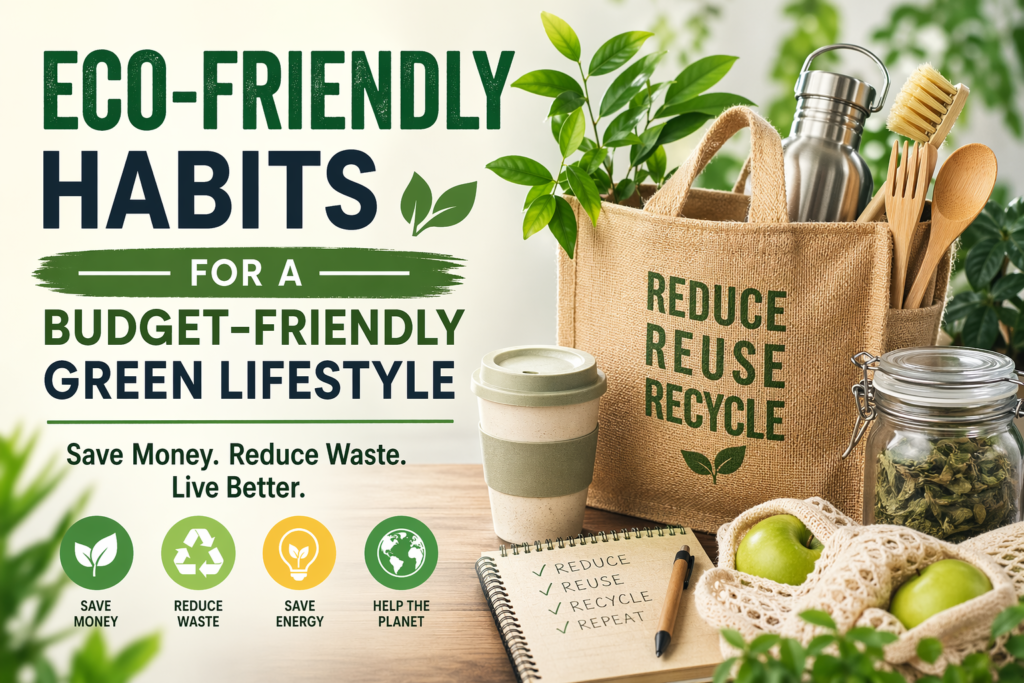
Living more sustainably is often presented as a shopping project: buy a new water bottle, replace every container in your kitchen, purchase “green” cleaning products, and invest in expensive energy-saving gadgets.
That approach misses the point.
The most budget-friendly green lifestyle usually begins with buying less, using what you already own, preventing waste, and lowering the amount of energy and water your household pays for each month.
As a savings editor, I have learned to be skeptical of any environmental tip that begins with an immediate purchase. A reusable product can be worthwhile, but it is not automatically a good financial decision simply because it carries an eco-friendly label. The smarter question is:
Will this habit reduce waste or recurring expenses without creating another unnecessary purchase?
This guide focuses on practical eco-friendly habits that can lower everyday costs. You will find realistic examples, lessons shared by frugal and low-waste communities, and reliable guidance from organizations including the EPA, USDA, ENERGY STAR, and the U.S. Department of Energy.
Quick Answer: Which Green Habits Save the Most Money?
For most households, the best place to start is not recycling or buying specialty products. It is controlling the resources you already pay for.
The highest-value habits are usually:
- Reducing food waste.
- Washing clothes in cold water.
- Fixing household water leaks.
- Buying fewer unnecessary products.
- Repairing or buying used before replacing.
- Using less heating, cooling, and lighting energy.
- Planning errands to reduce unnecessary driving.
These habits have little or no upfront cost. They are also easier to maintain than a complete lifestyle overhaul.
| Habit | Upfront Cost | Potential Value | Best For |
|---|---|---|---|
| Reducing food waste | $0 | High | Nearly every household |
| Cold-water laundry | $0 | Medium | Families doing frequent laundry |
| Repairing leaks | Low | Medium to high | Homeowners and renters |
| Buying secondhand | Varies | High | Clothing, furniture and tools |
| Replacing heavily used bulbs with LEDs | Low | Medium over time | Frequently used rooms |
| Using reusable items you already own | $0 | Low to medium | Kitchens and daily errands |
| Walking, biking or combining errands | $0 | Varies | Short local trips |
The exact savings will depend on your household size, utility rates, shopping habits and location.
1. Reduce Food Waste Before Cutting Your Grocery Budget
Food waste is one of the clearest examples of an environmental problem that is also a household budget problem.
According to the U.S. Environmental Protection Agency’s estimate of consumer food waste costs, wasted food costs the average American consumer approximately $728 per year. For a four-person household, the estimated annual cost is about $2,913.
You do not need a complicated meal-preparation system to improve this. Start with a five-minute kitchen check before every grocery trip:
- Look inside the refrigerator.
- Check which produce needs to be used first.
- Review the freezer before buying more meat or frozen meals.
- Build one or two dinners around ingredients you already have.
- Move older products to the front of shelves.
- Freeze bread, meat or leftovers before they spoil.
A practical example
Imagine that a household regularly throws away half a bag of salad, two forgotten yogurts and one container of leftovers each week. Individually, these items may not seem expensive. Repeating the same pattern every week, however, can quietly waste hundreds of dollars over a year.
The solution is not necessarily to buy cheaper groceries. It is to stop repeatedly purchasing food that never gets eaten.
The EPA recommends planning meals, checking food at home before shopping, making a list and buying only the amount likely to be used. Its guidance also notes that bulk-bin shopping can reduce waste when shoppers purchase only the quantity they need.
For a more complete shopping system, read DealZenoHub’s guide on how to save money on groceries without extreme couponing.
Use storage guidance instead of guessing
Many people throw food away because they are uncertain about storage times or misunderstand package dates. The USDA’s free FoodKeeper resource provides storage guidance for more than 650 food and beverage items.
A useful habit is to create a weekly “use first” section in your refrigerator. Place open sauces, aging vegetables, cooked food and short-dated dairy products together where they remain visible.
Visibility matters. Food hidden behind new groceries is much more likely to become forgotten food.
2. Wash Most Clothes in Cold Water
Laundry is a good place to make a change because the sustainable option does not require buying anything.
ENERGY STAR reports that water heating can account for about 90% of the energy a washing machine uses during a hot-water wash. It recommends using cold water whenever the fabric and type of soil allow it. Washing full loads can also reduce unnecessary water use.
For everyday shirts, jeans, towels and lightly soiled clothing, cold water is often the sensible default. Hotter settings can still be appropriate for specific sanitation needs, heavily soiled items or care-label instructions.
What people find practical
In frugal communities, line drying is frequently mentioned as a habit that reduces dryer use and may help clothing last longer. One discussion included users who relied on outdoor lines or indoor drying racks depending on the weather. These are individual experiences rather than controlled studies, but they highlight an important point: a sustainable habit is more likely to last when it fits the person’s home and routine.
You do not need to air-dry every item. A realistic approach could be:
- Air-dry delicate clothing and lightweight shirts.
- Use the dryer for towels, bedding and urgent loads.
- Clean the lint filter after each cycle.
- Avoid running the dryer for only one or two items.
- Use a higher washer spin speed when appropriate to remove more water first.
The best system is not the most extreme one. It is the one you can repeat without making laundry unnecessarily difficult.
3. Find and Fix Water Leaks
A dripping faucet may look insignificant because the loss happens slowly. Over weeks and months, however, the wasted water can become substantial.
EPA WaterSense estimates that an average family can waste around 9,400 gallons of water annually through household leaks. Common causes include worn toilet flappers, dripping faucets and loose fixture connections.
Try this simple home check:
- Turn off faucets, appliances and irrigation systems.
- Record the water meter reading.
- Avoid using water for two hours.
- Check the meter again.
- Investigate if the reading has changed.
For a toilet, add a few drops of food coloring to the tank and wait without flushing. Color appearing in the bowl can indicate a leaking flapper. Follow the fixture manufacturer’s instructions, or contact the landlord or a qualified plumber when the repair is outside your experience.
Renters should report leaks too
Renters may not be responsible for replacing plumbing parts, but they can still report running toilets, damp cabinets and dripping fixtures promptly. Taking a short video can make a maintenance request clearer and document how frequently the leak occurs.
Ignoring a leak because the water bill is included in rent does not eliminate the waste. It may also allow a small maintenance issue to become a more expensive repair.
4. Stop Buying “Eco-Friendly” Replacements Too Early
One of the most wasteful sustainability mistakes is throwing away a usable item to replace it with a greener-looking version.
A plastic storage container you already own is usually more useful in your kitchen than the same container sitting in a landfill while you purchase a new matching set.
Use existing items until they become unsafe, damaged or no longer functional. Then evaluate the replacement based on:
- Expected lifespan.
- Frequency of use.
- Ease of cleaning.
- Repairability.
- Replacement parts.
- Total price, including shipping.
- Whether it replaces a recurring disposable purchase.
This is also a smart defense against social-media-driven spending. DealZenoHub’s guide to how TikTok influences Gen Z spending explains why viral products can create urgency even when shoppers already own something that performs the same function.
A green label does not turn an unnecessary purchase into a necessary one.
5. Calculate Whether Reusable Products Are Worth It
Reusable products can save money, but not every reusable product will pay for itself quickly.
Use a simple cost-per-use test:
Purchase price ÷ expected number of uses = approximate cost per use
Suppose a reusable bottle costs $20. If it replaces a $2 bottled drink 50 times, the purchase has prevented $100 in bottled-drink spending before considering tap-water costs. That is a meaningful difference.
The same logic may not work for an expensive specialty container that you use only twice.
Low-waste communities often discuss cloth rags, reusable grocery bags and bar soap as changes that became easy to maintain because they fit naturally into existing routines. Other users warn that purchasing a large collection of new reusable products can become another form of consumption. These are personal experiences, but together they provide a valuable lesson: start with one product that replaces something you buy repeatedly.
Good candidates may include:
- A durable bottle if you regularly buy bottled water.
- Cloth cleaning rags made from worn towels or shirts.
- A lunch container for frequent work or school meals.
- Rechargeable batteries for frequently used compatible devices.
- A washable shopping bag kept near the door or in the car.
Avoid buying an entire “zero-waste starter kit” before you know which products your household will actually use.
6. Buy Less, Repair More and Borrow Rarely Used Items
The EPA places refusing, reducing, reusing and repairing ahead of disposal-focused habits. Its guidance specifically recommends borrowing, renting or sharing items used infrequently, such as tools and party decorations.
Before replacing an item, ask four questions:
- Can it be cleaned?
- Can a low-cost part fix it?
- Can it be repaired safely?
- Can I borrow or rent the replacement for this one task?
A realistic tool example
Buying a power tool for one afternoon project may not be the cheapest option after considering storage, maintenance and how rarely it will be used. Borrowing from a relative, using a local tool library or renting it for the day may cost less and avoid adding another barely used object to the garage.
Repairs should still make financial sense. A $15 replacement part for a sturdy appliance can be worthwhile. Repeatedly repairing a failing product with safety problems may not be.
For broader spending decisions, see 20 smart money habits that can improve financial stability.
7. Shop Secondhand With a List
Buying used can reduce both purchase costs and demand for newly manufactured goods, but thrift shopping is not automatically frugal.
A low price can encourage shoppers to accept:
- Clothing that does not fit.
- Furniture that does not fit the room.
- Appliances that cannot be tested.
- Products with missing parts.
- Items purchased only because they seem rare.
Before visiting a thrift store or resale marketplace, write down what you need, the measurements and your maximum budget.
Inspect:
- Seams, zippers and fabric wear.
- Odors, stains and signs of moisture.
- Furniture joints and structural stability.
- Product labels and model numbers.
- Availability of replacement parts.
- The price of the same item new.
The EPA recommends buying used clothing and household items, repairing broken products and selling or donating usable items rather than discarding them.
DealZenoHub’s guide to the best U.S. cities for thrift shopping also explains how the secondhand experience varies between clothing, furniture, outdoor gear and designer resale.
8. Replace the Bulbs That Matter Most
You do not need to replace every working light bulb in your home at once.
Start with the bulbs used for the greatest number of hours, such as those in the kitchen, living room, hallway or home office.
The U.S. Department of Energy says LEDs can use up to 90% less energy and last up to 25 times longer than traditional incandescent bulbs.
When buying an LED bulb, compare:
- Lumens for brightness.
- Color temperature.
- Fixture compatibility.
- Dimmability when needed.
- Estimated annual energy cost.
- Suitability for enclosed or outdoor fixtures.
The expert move is to replace high-use bulbs first and allow rarely used bulbs to reach the end of their useful lives. That controls the upfront cost while directing the efficiency improvement toward the rooms where it matters most.
9. Use Heating and Cooling More Intentionally
Heating and cooling habits can influence household energy use, but comfort, health and local weather must come first.
Low-cost actions include:
- Closing curtains during intense summer sun.
- Opening them for useful winter sunlight.
- Sealing obvious drafts around doors.
- Cleaning or replacing HVAC filters according to system instructions.
- Avoiding heating or cooling unused rooms when the system permits it.
- Using ceiling fans appropriately while occupying the room.
- Adjusting the thermostat gradually rather than making the home uncomfortable.
Do not purchase a smart thermostat solely because it is marketed as green. First confirm that it is compatible with your HVAC system and that your schedule would allow automation to make a meaningful difference.
A simple programmable schedule may provide enough control for many households.
10. Plan Errands Instead of Making Repeated Trips
Not every household has safe public transit, walkable stores or reliable cycling infrastructure. Advice that ignores these differences is not useful.
Where practical, reduce unnecessary transportation spending by:
- Combining several errands into one route.
- Comparing delivery fees with the real cost of an additional trip.
- Walking to very close destinations when the route is safe.
- Carpooling for regular activities.
- Using public transportation when it is reliable and economical.
- Avoiding special trips for one forgotten low-cost item.
- Keeping tires properly inflated according to the vehicle manufacturer.
A simple example is planning grocery pickup, pharmacy collection and a return for the same outing instead of driving the route on three separate days.
The sustainable choice has to work in real life. A parent transporting children in an area with limited transit will have different options from a student living near a bus or train line.
11. Avoid Bulk Purchases That Create Waste
Larger packages are often marketed as the economical choice, but the lowest unit price does not guarantee the lowest household cost.
Bulk buying works best for products that:
- Are used consistently.
- Store safely for a long time.
- Have a predictable consumption rate.
- Will not encourage unnecessary use.
- Cost less per usable unit after membership and travel costs.
It can fail with produce, bakery items, unfamiliar snacks, skincare products and oversized condiments.
Before buying in bulk, ask:
Will we use all of this before its quality declines?
A $12 package that is fully used can be better value than an $8 package that is partly discarded. But a $20 bulk package is not a bargain when half of it ends up in the trash.
12. Use Coupons Only for Planned Purchases
Coupons can reduce the cost of necessary household products, but they can also encourage shoppers to spend more.
A discount is useful when it applies to:
- An item already on your list.
- A replacement you genuinely need.
- A brand that remains competitively priced after the discount.
- An order that meets free-shipping requirements without filler items.
- A product whose size and quantity your household will use.
It is not useful when it causes you to add unnecessary products or choose a more expensive brand solely to “unlock” a discount.
Before purchasing a reusable product, efficient appliance or household essential online, compare the complete checkout cost—not just the percentage advertised. DealZenoHub’s guide to the best coupon apps and browser extensions explains how different savings tools handle coupons, price comparisons and cashback.
13. Build a “Use What We Have” Week
Once a month, choose several days when meals and activities are planned around items already in the home.
A use-what-we-have week might include:
- Meals made from freezer and pantry ingredients.
- Wearing clothing already owned instead of browsing sales.
- Using unfinished personal-care products.
- Repairing one damaged item.
- Reading existing books or using the local library.
- Planning free entertainment.
- Canceling one unnecessary shopping trip.
This is not a deprivation challenge. It is an inventory reset.
The exercise often reveals duplicate products, forgotten food and items purchased for a problem that had already been solved.
14. Focus on One Room at a Time
Trying to make an entire home sustainable in one weekend usually leads to overspending and abandoned routines.
Choose one area:
Kitchen
Reduce spoiled food, use existing containers and plan meals.
Laundry room
Switch suitable loads to cold water and reduce partial loads.
Bathroom
Check for leaks and finish products before replacing them.
Closet
Repair, alter, donate or sell clothing before buying more.
Home office
Reduce unnecessary printing and turn off equipment that does not need to remain active.
Spend two to four weeks improving one area before moving to the next. This provides enough time to see whether the habit fits your household.
15. Track Money Saved, Not Just Waste Reduced
A habit becomes easier to maintain when you can see the result.
Track three categories for 30 days:
- Food that was rescued from being discarded.
- Purchases avoided, delayed or replaced with used items.
- Utility habits changed.
You do not need to calculate every gallon or kilowatt-hour. A simple note is enough:
- “Used freezer vegetables instead of ordering dinner.”
- “Repaired zipper instead of replacing jacket.”
- “Washed four loads in cold water.”
- “Borrowed drill instead of buying one.”
- “Canceled an unnecessary online order.”
At the end of the month, estimate the spending avoided and decide which habits deserve to become permanent.
Eco-Friendly Habits That Can Become False Economies
Some sustainable choices can cost more when they are poorly planned.
Be cautious when:
- Replacing functioning products prematurely.
- Buying expensive reusable products with no clear use.
- Driving a long distance to recycle one small category of material.
- Paying a large premium for vague environmental marketing.
- Buying bulk perishables that your household cannot finish.
- Repairing unsafe items beyond their reasonable life.
- Purchasing low-quality “green” products repeatedly.
- Buying products because an influencer describes them as essential.
The goal is not to build a perfect-looking sustainable home. It is to reduce unnecessary consumption while improving how your household uses money and resources.
A Practical 30-Day Green Savings Plan
Week 1: Food
Check the refrigerator before shopping, plan four dinners and freeze one food item before it spoils.
Week 2: Energy
Wash suitable laundry in cold water, run full loads and identify the most frequently used light bulbs.
Week 3: Water
Check toilets, faucets, showerheads and visible plumbing connections for leaks.
Week 4: Consumption
Repair one item, buy one needed product used or postpone one purchase for 72 hours.
At the end of 30 days, keep the habits that produced a noticeable financial or practical benefit. Adjust or abandon the ones that created too much work.
Frequently Asked Questions
What eco-friendly habit saves the most money?
Reducing food waste can produce significant savings because it prevents households from paying for food that is never eaten. Energy, water and transportation habits may also deliver meaningful results depending on local costs and household behavior.
Is living sustainably more expensive?
It can be more expensive when sustainability is treated as a reason to replace products or buy premium alternatives. It can be less expensive when it means buying less, reducing waste, repairing products and lowering utility use.
Which reusable products are worth buying?
The best reusable products replace disposable items you purchase frequently. Calculate the purchase price, expected uses, cleaning cost and whether the item fits your routine before buying.
Should I replace all my light bulbs with LEDs immediately?
Not necessarily. Start with frequently used fixtures, then replace other bulbs when they fail. This limits the upfront expense while directing savings toward the lights that consume the most energy.
Is buying secondhand always better?
No. A secondhand purchase is only good value when the item is safe, functional, appropriately priced and genuinely needed. Inspect condition and compare the price with a new alternative before deciding.
How can renters live more sustainably?
Renters can reduce food waste, wash clothes in cold water, report plumbing leaks, use curtains strategically, avoid unnecessary purchases and choose efficient replacement bulbs where permitted.
Final Thoughts
A budget-friendly green lifestyle does not require perfection, expensive products or an overnight transformation.
Start with the places where money and resources are already being wasted: uneaten food, unnecessary purchases, leaking water, repeated car trips, hot laundry cycles and products discarded before the end of their useful lives.
In my experience reviewing money-saving strategies, the habits that survive are rarely the most impressive ones. They are the changes that make daily life simpler and produce a result people can see.
Choose one food habit, one household habit and one shopping habit. Track them for 30 days before adding anything else.
Sustainable living becomes much easier when it is not another expense. It becomes part of a smarter way to manage what you already have.